NWS Alert Ticker v2.3 — CAWA Coverage • Smart Pulse • Zone Descriptors
Live NWS Watches & Warnings


Tag: #MDWx

  • Strong Storm System To Affect The Region On Monday!!!

    Strong Storm System To Affect The Region On Monday!!!

    A powerful early spring low pressure system will develop in the Plains and strengthen as it moves into the Great Lakes on Monday.

    Due to the rapidly strengthening storm and its neutral/negatively tilted trough, there will likely be very strong wind shear ahead of the cold front. While moisture return in the warm sector may be limited, it is possible that the strong kinematics may be sufficient to produce severe weather across parts of the region Monday afternoon.

    Some topics that we will discuss in this blog include: 

    • Meteorological Analysis of The Storm System
    • Potential Impacts From The Storm Across Our Area
    • Timing of the Front Is Important

    Now let’s dive into our discussion about the upcoming powerful storm system!

    Meteorological Analysis of The Storm System

    As we head into Sunday, a strong storm system will begin to develop across the central United States. As the storm begins to move northeast toward the Great Lakes, it is expected to intensify into a strong mid-latitude cyclone by Monday. The storm system will also begin to transition from a neutral to a negatively 500mb trough as this process occurs. 
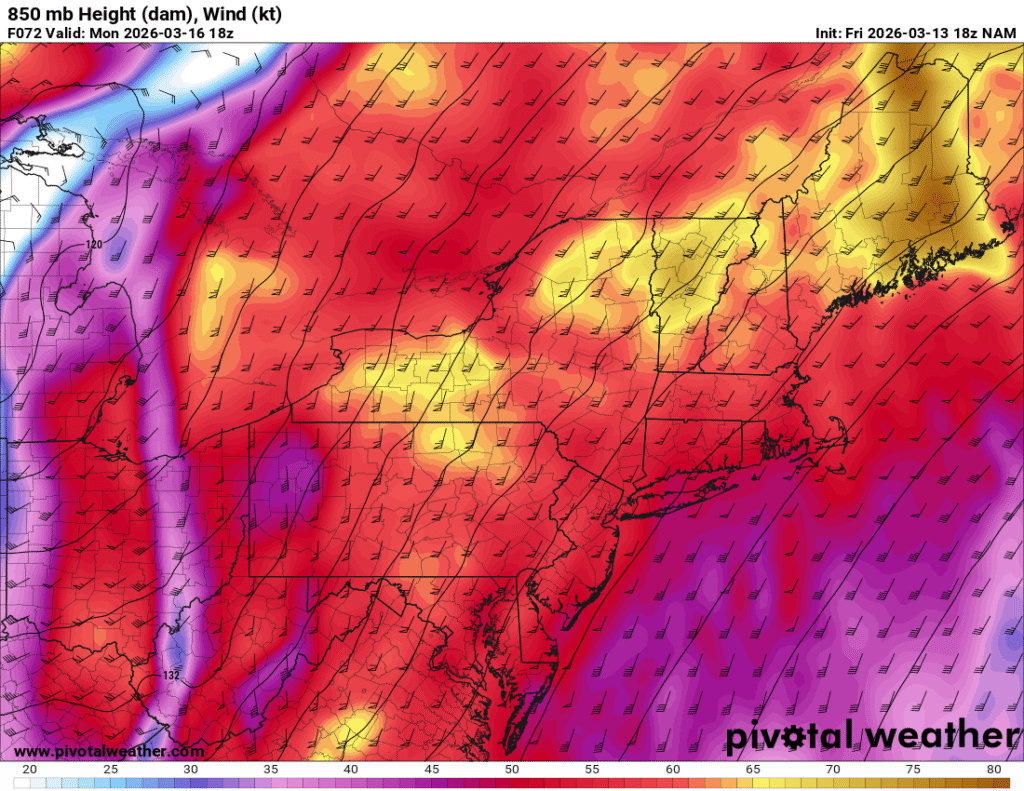
    The image above shows a depiction of the 850 mb jet winds across the area early Monday afternoon based on 18z NAM 12 km  model guidance. Image courtesy of Pivotal Weather

    This will result in a strong low level 850 mb jet streak that will develop across the Mississippi Valley on Sunday and move across the Ohio Valley, Mid-Atlantic and Northeast on Monday, leading to impactful and potentially damaging weather conditions across a wide swath of the central and eastern United States. 

    Potential Impacts From The Storm Across Our Area

    Due to the rapidly strengthening storm and its neutral/negatively tilted trough, there will likely be very strong wind shear ahead of the cold front. While moisture return in the warm sector may be limited, it is possible that the strong kinematics may be sufficient to produce severe weather across parts of the region Monday afternoon.
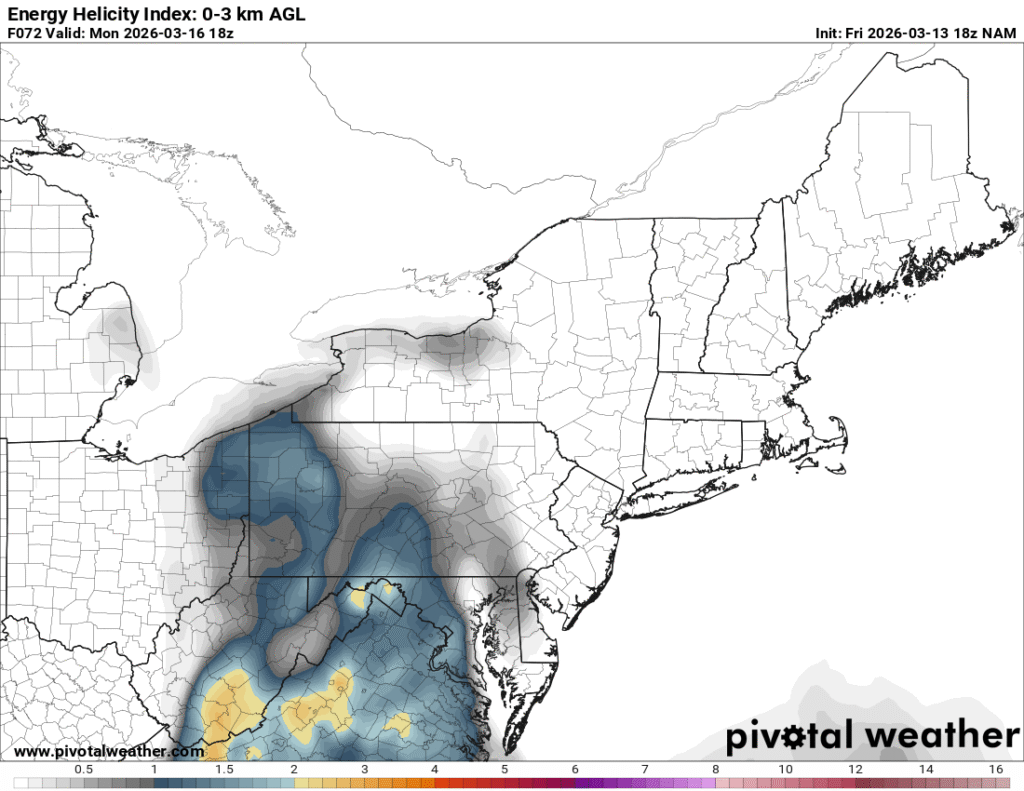
    The image above shows a depiction of the Energy Helicity Index (EHI) across the region early Monday afternoon based on 18z NAM 12km guidance. Image courtesy of Pivotal Weather

    While it is too early to analyze many of the convective allowing, high revolution model guidance, the pattern appears favorable for the potential for impactful damaging winds and potentially embedded tornadoes along the cold front. When analyzing the 18z NAM 12 km guidance, we can see that there is a decent Energy Helicity Index (EHI) across our region Monday afternoon. This parameter helps to determine where the best overlap of instability and wind shear are located. The severe weather potential will likely be most prevalent in the area where the EHI is at its maximum. If sufficient moisture returns ahead of the front occurs, it is possible that a few discrete supercellular storms could develop as well. At this time, this idea appears unlikely across most of our area. 

    Timing of The Front Is Important 

    The timing of the front will be important. If the system is slower to arrive, the potential for severe weather would increase across many areas. A frontal passage that occurs during the morning hours would not allow for much surface heating and destabilization to occur prior to the passage of the cold front; whereas, an afternoon frontal passage would allow for a heightened severe weather potential, resulting from stronger updrafts. Even if the timing of the front is not favorable for severe weather, it is possible that a line of strong to damaging winds will still occur, given the strong low level jet that will be moving through the region.

    It is important to emphasize that the potential impacts from this storm system are still two to three days away, and changes to the forecast will certainly occur over the next couple of days. 
  • How Much Severe Weather Will We Have This Spring?

    How Much Severe Weather Will We Have This Spring?

    As we approach the end of winter, many people are looking forward to the return of warmer weather in the coming weeks. While the approach of spring is a welcoming thought following a cold winter, spring time can also bring with it the potential for severe weather episodes that deliver damaging winds, large hail, and tornadoes. While severe weather is complicated, there are four primary ingredients that are necessary for the development of severe weather.

    These ingredients include: 

    • Shear: Wind shear measures the amount of change in wind speed and direction through the atmosphere. 
    • Lift: The amount of positive buoyancy (or upward motion) available for air parcels to rise and form clouds and precipitation. 
    • Instability: Instability or convective available potential energy (CAPE) refers to the amount of energy that is available for the atmosphere to produce thunderstorms. 
    • Moisture: Warm, moist air rises to the lifting condensation level (LCL) where condensation occurs. Strong upward motion can then lead to tall convective thunderstorms that can produce severe weather. 

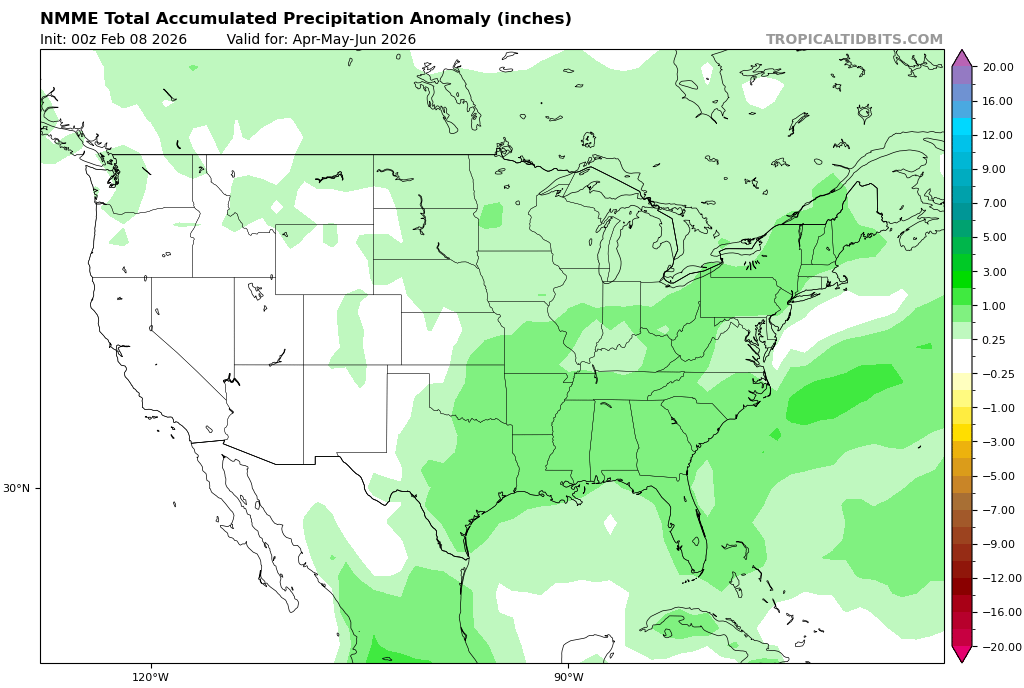
    The image above shows a depiction of the precipitation pattern for the spring based on the NNME model guidance. Image courtesy of Tropical Tidbits

    The availability of these ingredients will largely depend on the jet stream pattern that develops across the United States as we approach spring. If the jet stream sets up in a wavy pattern, the number of severe weather opportunities will likely increase as systems bring in the warm, moist air and wind shear needed for severe weather development. 

    How Does ENSO Affect Severe Weather?

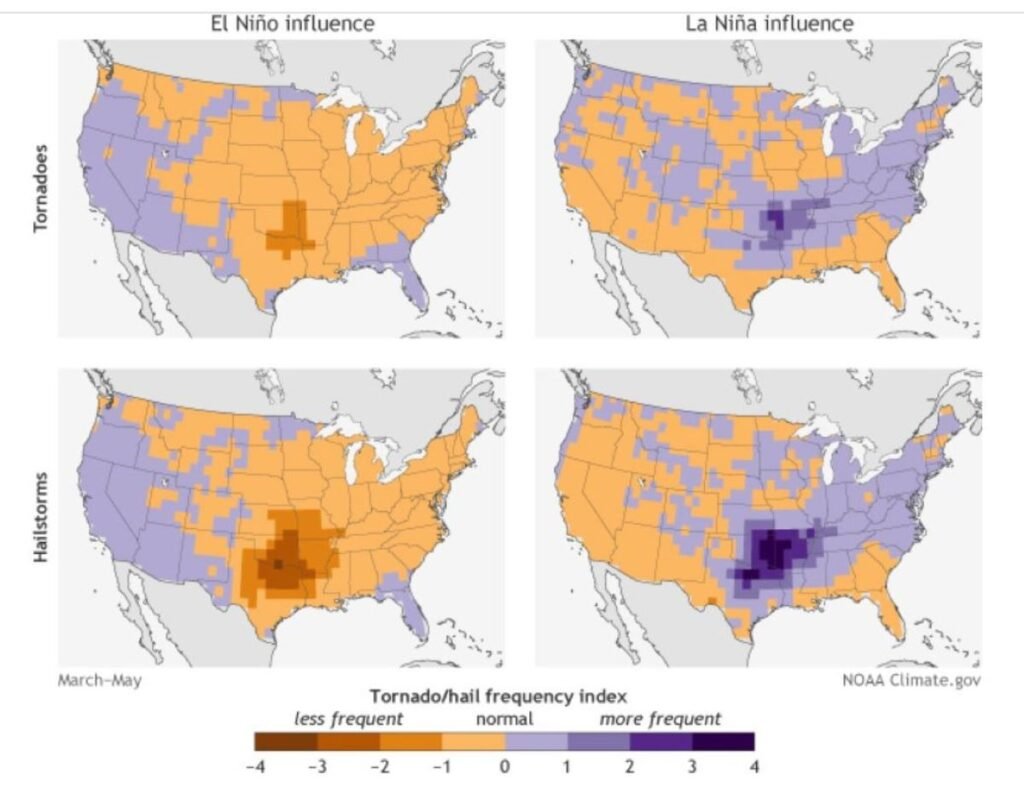
    The persistence of an active severe weather pattern into late spring and early summer will likely depend on how quickly El Nino develops in the equatorial Pacific Ocean. A quicker transition to El Nino would favor a decrease in severe weather, while a continuation of El Nino Southern Oscillation (ENSO) neutral conditions could lead to severe weather continuing into the summer. 

    The images above show a depiction of tornado and hail frequency associated with positive and negative ENSO conditions. Image courtesy of National Oceanic and Atmospheric Administration (NOAA).

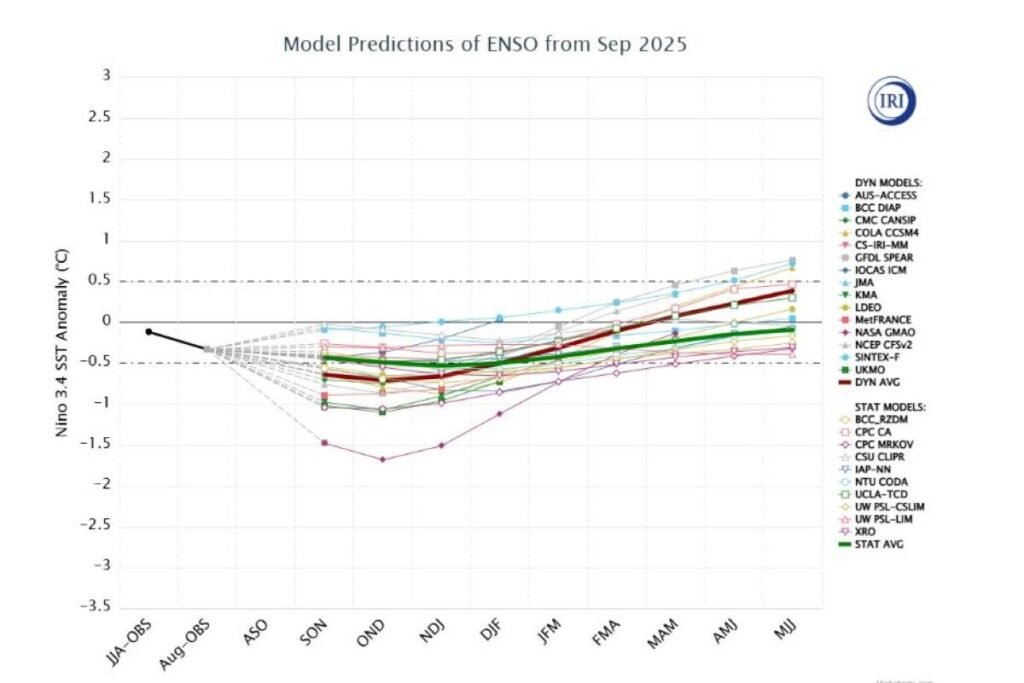
    Through much of the winter season, La Nina conditions have been observed in the equatorial Pacific. With that in mind, La Nina has begun to weaken in recent weeks and is likely to progress to neutral condition this Spring. An eventual transition to EL Nino appears likely during the summer or fall season of 2026.

    The image above shows the ENSO forecast based on guidance from various long range forecast models. Image courtesy of the National Weather Service.

    The Big Picture

    While uncertainties exist in any long range forecast, the general consensus favors a fairly active severe weather season with near to above average severe weather observation expected in the area. Now is the time to start thinking about severe weather safety so that you are prepared to protect your family and property during severe weather. 

    It is important to note that uncertainties still remain in the frequency and intensity of severe weather during the upcoming spring, and this blog may be updated in the future to account for changes to the forecast. 

  • Winter Weather On The Way For Midweek

    After a cold start to the week, more winter weather is on the way for the Central Appalachian region as we head through the midweek period. A clipper system will affect the region on Wednesday, bringing the opportunity for rain, accumulating snow, and strong winds to the region. 

    Here are the primary highlights for the upcoming system:

    • Accumulating snow is likely for areas near and north of interstate 80 and in the higher terrain of PA, WV, and MD on Wednesday. 
    • Low elevation areas south of Interstate 80 in PA may see little to no snow accumulation during the daylight hours on Wednesday depending on precipitation type. 
    • A light accumulating snow is likely in most areas Wednesday night into Thursday due to falling temperatures and wrap-around snow.
    • Blizzard conditions are possible in the mountains of western MD and eastern WV. 
    • Windy conditions are expected for all areas.

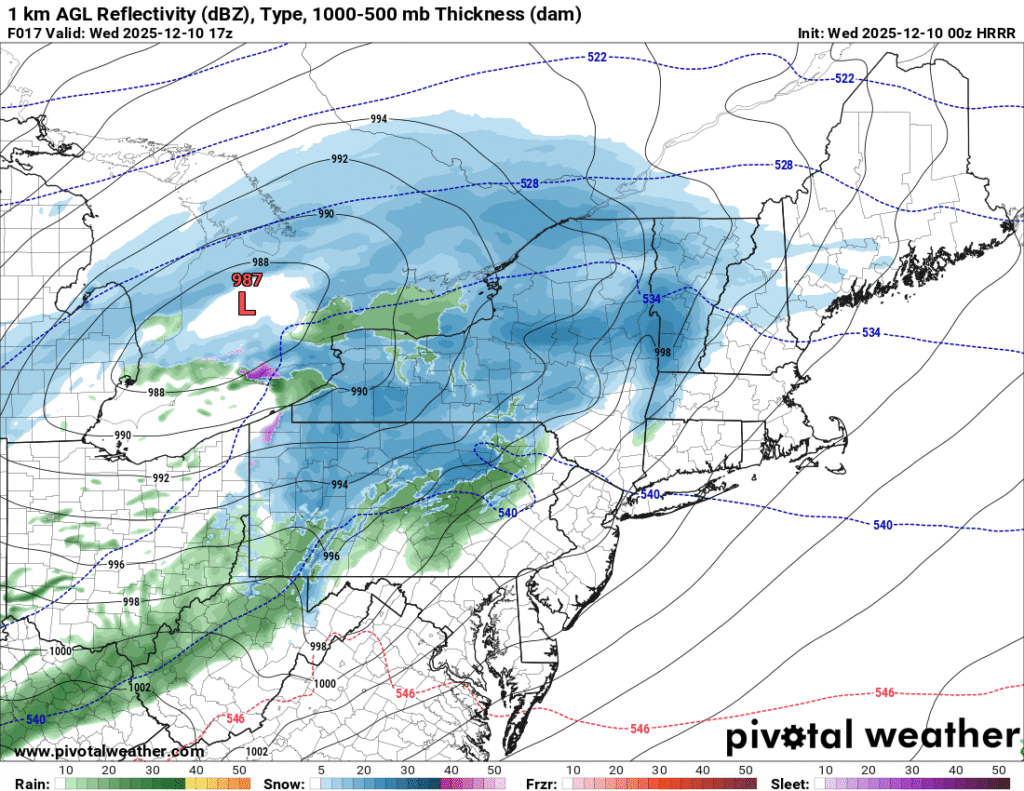
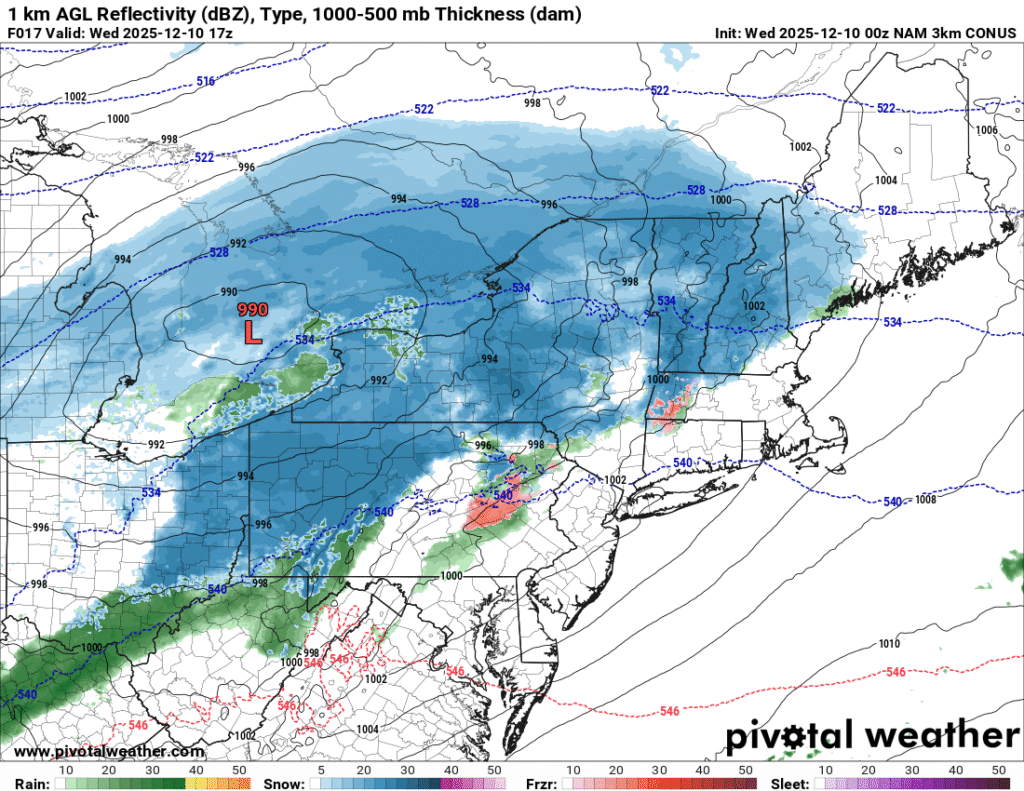
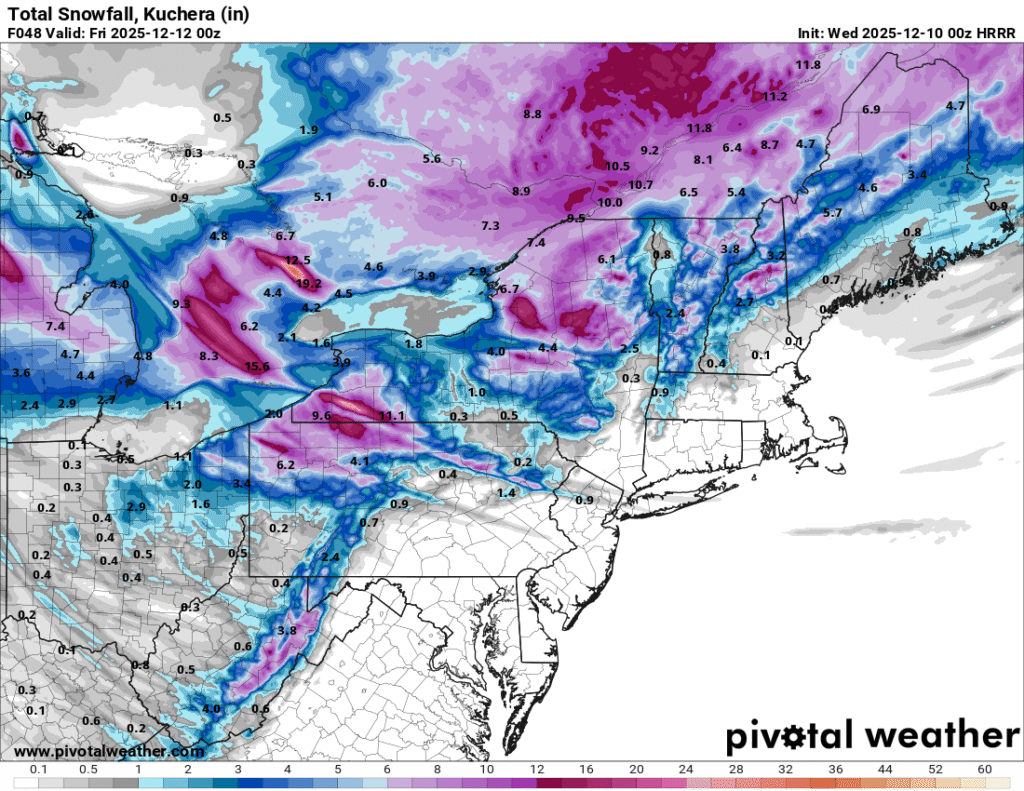
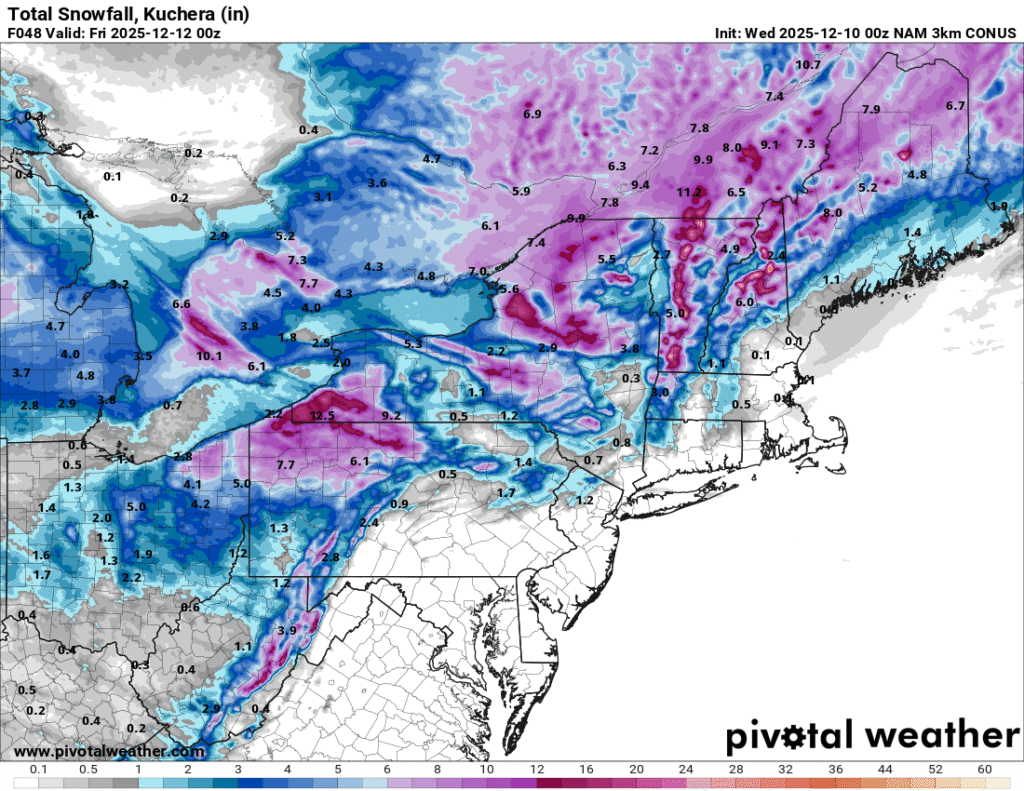
    While confidence is high in accumulating snow along and north of Interstate 80 and in the higher elevations, there is more uncertainty regarding the potential for accumulating snow in the Pittsburgh Metro area on Wednesday. Some model guidance (00z NAM 3km) would suggest that a light accumulation of snow is possible, while other guidance (00Z HRRR) would suggest that this area would receive primarily rain or a rain/snow mix, leading to little or no accumulation 

    The images above show a depiction of the expected precipitation type based on 00z NAM 3km and HRRR guidance. Image courtesy of Pivotal Weather

    As would be expected, the NAM 3km is forecasting higher snowfall totals compared to the HRRR, given that it is forecasting more of the precipitation to fall in the form of snow. In addition to the synoptic moisture associated with the system, upslope and lake effect snow will enhance the snow accumulations downwind of Lake Erie and in the higher terrain along and west of the Allegheny Front. In addition to enhanced upslope snow, strong winds will create low visibility that could create blizzard conditions in the mountains of western Maryland and West Virginia. 

    The images above show expected snowfall accumulations across the region through 00z Friday, based on the 00z HRRR and NAM 3km model guidance. Image courtesy of Pivotal Weather

    In general, 3 to 5 inches of snow can be expected across areas along and north of Interstate 80 in western Pennsylvania with 3 to 6 expected in the higher terrain of southwestern PA and northern West Virginia. 

    While there are some uncertainties in the model guidance regarding the exact amount of snow expected across the region, many areas will receive at least light accumulating snow through Thursday. As much colder air spills into the region Wednesday night, slippery travel can be expected across most areas. 

    In addition to the midweek system, there will likely be two more opportunities for snow through the weekend. 

    Additional resources for additional information:

  • Thanksgiving Week Weather Forecast Update

    While there is still some uncertainty regarding the weather forecast for the Central Appalachian region, there are some general ideas that seem to be emerging in the model guidance.

    Here is a breakdown of the Thanksgiving week forecast:

    • A seasonably cool, but generally quiet start to the week on Monday
    • A milder, but more unsettled period for Tuesday into Wednesday
    • A colder weather pattern will take shap around Thanksgiving Day
    • A low end winter weather impact is possible around late week. 
    • A moderating trend by the end of the weekend

    What Is The Pre-Thanksgiving Weather Forecast?

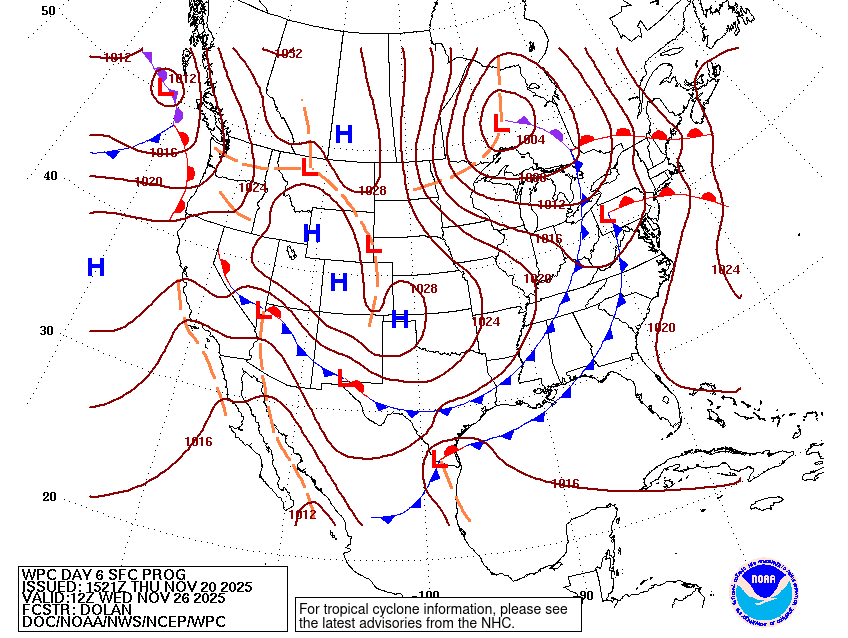
    The beginning of Thanksgiving week is likely to favor seasonably cool, but dry weather conditions over the Central Appalachians. As we head into the day on Tuesday, a weather system will likely move northeast from the Southern Plains toward the Great Lakes. This system will likely bring the chance for rain to the forecast as we head into the day on Tuesday. Rain chances will likely continue until the passage of a cold front around or just prior to Thanksgiving Day. 

    The model image above highlights the approach of a strong cold front at midweek. Image courtesy of the Weather Prediction Center

    What Should You Expect For Your Thanksgiving Day Forecast?

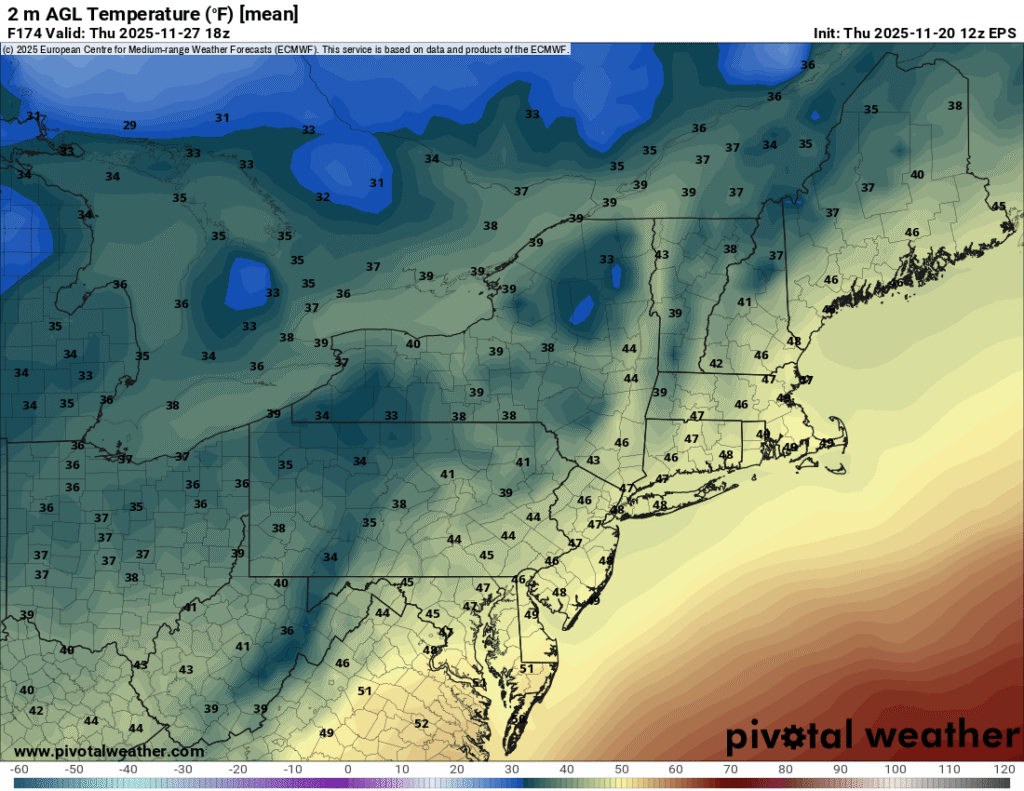
    As we head out to our family gatherings to eat turkey and watch football, there is some uncertainty in the forecast across the Central Appalachian region. Most of the uncertainty is regarding the timing of the midweek cold font. An earlier passage would likely mean a colder Thanksgiving Day, with the potential for some snow showers or flurries. If the front is more delayed, Thanksgiving Day could shape up to be an unsettled day with seasonal temperatures. 

    This image shows forecasted highs for the Central Appalachia region on Thanksgiving Day based on European ensemble guidance. Image courtesy of Pivotal Weather

    Is It Going To Snow After Thanksgiving?

    While this time period is over a week away,  there is no indication that there will be widespread significant snowfall across the region. While there is the potential for lake effect snow, the details of any potential impacts are highly uncertain at this range. 

    Depending on how quickly the cold air retreats, there may be some moderation in temperatures during the weekend. 

    The forecast is still about a week out, and there will need to be modifications to the forecast as we get closer to the Thanksgiving holiday.

    Here is a quick recap of the Thanksgiving week weather forecast:

    • The week will likely start on a seasonably cool, but dry note.
    • There will likely be a couple days of mild, but unsettled weather as we approach Thanksgiving Day
    • Thanksgiving Day will likely turn colder
    • Any meaningful snow accumulation around late week will likely be connected to lake effect. 
    • A moderating trend is possible late in the weekend

    Be sure to check back for updates to the Thanksgiving weatehr forecast as the computer models begin to diverge on a solution.