NWS Alert Ticker v2.3 — CAWA Coverage • Smart Pulse • Zone Descriptors
Live NWS Watches & Warnings


Category: Uncategorized

  • Major Winter Storm Expected This Weekend!!!

    Major Winter Storm Expected This Weekend!!!

    A major winter storm will bring significant snowfall to the region from Saturday night into Monday morning. Confidence continues to increase that there will be a substantial winter storm across the Central Appalachian region. While there are uncertainties regarding snowfall totals and precipitation type, the region should prepare for one of the most widespread impactful winter storms that has been observed since winter storm Jonas in 2016. 

    What We Know:

    • A significant winter storm will affect the region this weekend.
    • Some areas could measure snow in feet.
    • Arctic air will precede and follow the storm.
    • The combination of heavy snow, wind, and reduced visibility will make travel difficult or impossible. 

    What We Do Not Know:

    • The exact timing of the end of the storm
    • Exact snowfall totals
    • The location and amount of mixed precipitation in our area

    Some topics that we will cover in this blog include:

    • What Are The Meteorological Factors That Are Causing The Upcoming Winter Storm?
    • When Is The Upcoming Winter Storm Expected To Begin And End?
    • How Much Snow Is Expected To Fall With The Upcoming Winter Storm?
    • Will There Be Any Mixed Precipitation Across The Region?

    What Are The Meteorological Factors That Are Causing The Upcoming Winter Storm?

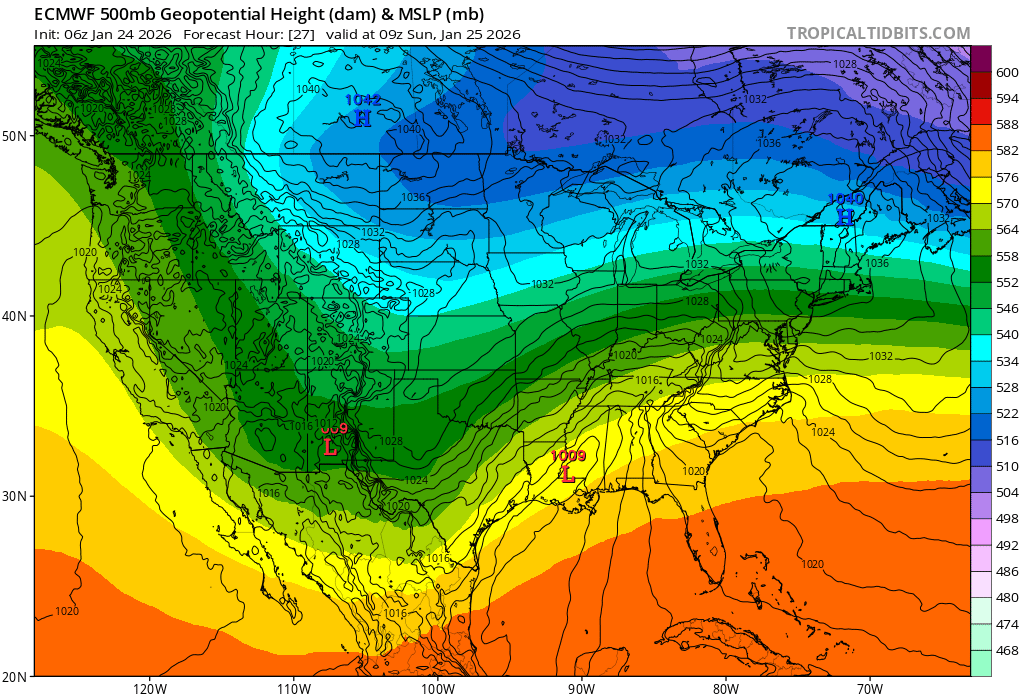
    There are three meteorological factors that are combining to create this massive winter storm. 

    1. The first factor is the presence of a strong Arctic high pressure system in Canada. This will funnel cold air southward ahead of the storm system. 
    2. The second factor is an upper level low pressure system that is moving northeast from the Southern Plains. This southern stream piece of energy is helping to supply rich moisture. 
    3. The third factor is a northern stream trough that is moving southeastward from the Northern Plains. This is the piece of energy that is steering the southern stream energy northeastward from the Southern Plains this weekend. 

    This image shows a depiction of the 500 mb height pattern across the U.S. early Sunday morning based on the 06Z Saturday ECMWF model guidance. Image courtesy of Tropical Tidbits.

    As these systems try to phase together, rich moisture from the very warm Gulf of America will get pushed northeastward into the Arctic air mass that will be established across the Central Appalachian region This will lead to a widespread significant winter storm with heavy snow for many areas.

    When Is The Upcoming Winter Storm Expected To Start And End?

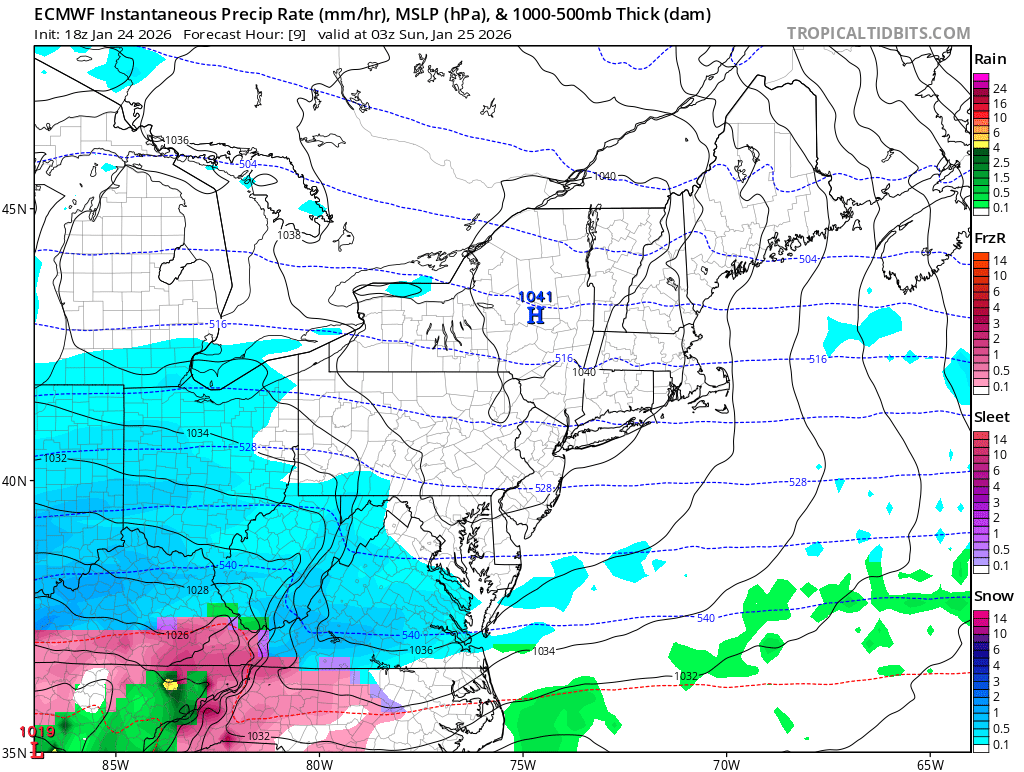
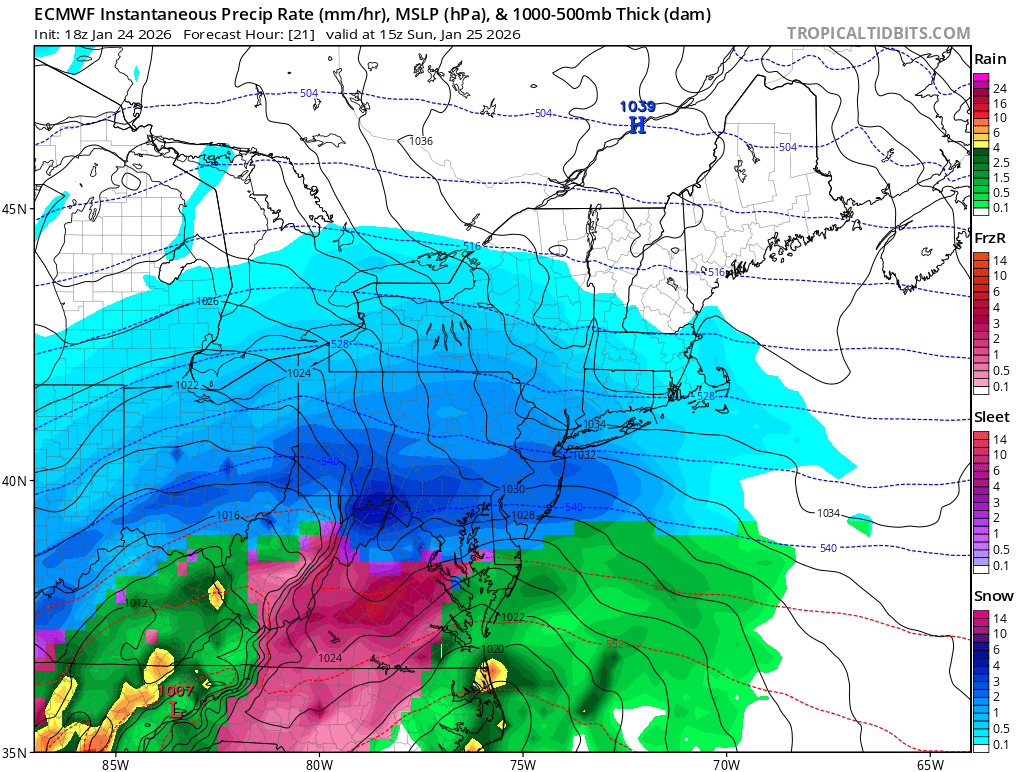
    While there still remains some uncertainty regarding the exact start time for the upcoming winter storm. Snow is beginning to push into the region from the west as of Saturday evening. As expected, there is some dry air that is initially hindering the moisture from reaching the surface. As we head into the overnight hours, the air will begin to become more saturated, resulting in snow reaching the ground and increasing in intensity.

    The image above shows a depiction of the 18Z Saturday ECMWF surface reflectivity as snow begins to move into the region Saturday evening. Image courtesy of Tropical Tidbits. . 

    The snow will fall heavily at times through the day on Sunday and begin to taper off overnight and into Monday morning. It is possible that some northwest  flow light snow showers may continue into the day on Monday, but this snowfall would be much less impactful.

    The image above shows a depiction of the 18Z Saturday ECMWF surface reflectivity as the snow exits the region Sunday night. Image courtesy of Tropical Tidbits

    How Much Snow Is Expected To Fall With The Upcoming Winter Storm?

    Now it is time for the section of the blog that everyone wants to see the most. The National Weather Service has issued a Winter Storm Warning for the entire Central Appalachian region for the upcoming powerful winter storm. At this time, it appears that significant snowfall is likely to fall in many areas of the region. 

    The image above shows a depiction of the 12Z Saturday ECMWF surface reflectivity across the area on Sunday afternoon. Image courtesy of Tropical Tidbits

    Heavy snowfall rates are likely across many areas through the day on Sunday as the rich Gulf moisture gets thrown into Arctic air entrenched across the region. With this in mind there are some areas that appear to be in a more favorable position to see a major/crippling snowstorm. 

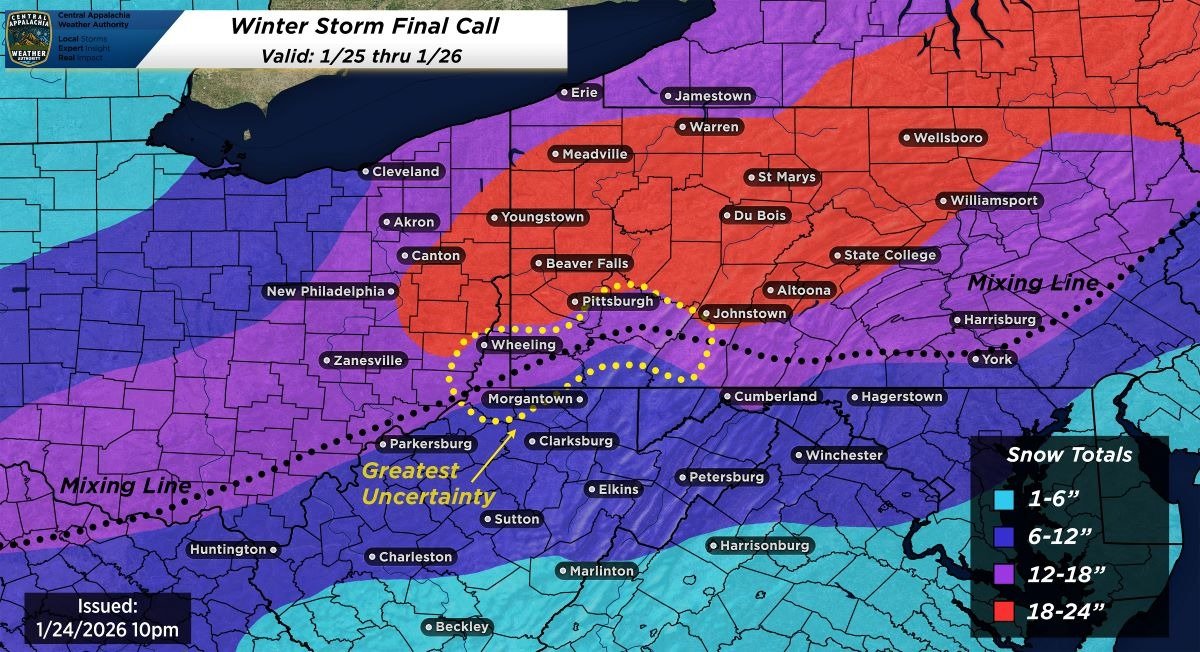
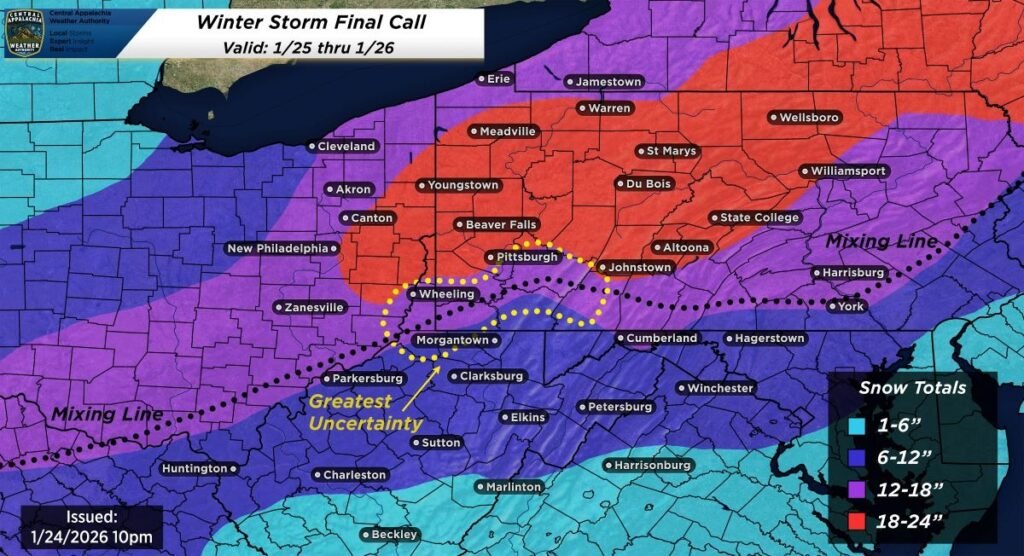
    The map depiction above shows the currently expected snowfall totals form the upcoming winter storm. 

    Although some uncertainty still remains, it currently appears that there is going to be significant snowfall accumulation in many areas.

    Here is a snowfall forecast range for several cities across the region:

    • Youngstown, OH: 18-24 inches
    • Du Bois, PA: 18-24 inches
    • Warren, PA: 18-24 inches
    • Harrisburg, PA: 12-18 inches 
    • State College, PA: 18-24 inches 
    • Zanesville, OH: 12-18 inches
    • Washington, PA: 12-18 inches
    • Hagertown, MD: 6-12 inches 
    • Morgantown, WV: 6-12 inches
    • Charleston, WV: 6-12 inches
    • Beckley, WV: 1-6 inches

    It is important to emphasize that changes to the forecast snow totals could occur as the storm gets closer and model guidance converges on the eventual outcome. 

    Will There Be Any Mixed Precipitation Across The Region?

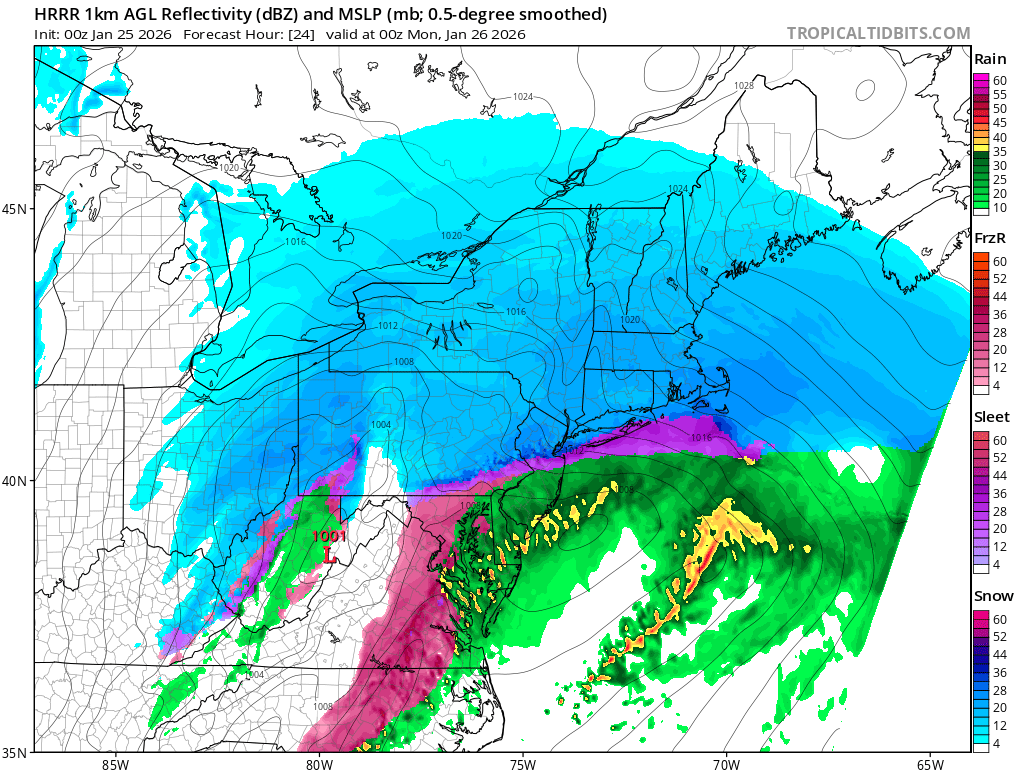
    While the exact placement of the line between mixed precipitation and snow is uncertain, it is likely that a changeover to mixed precipitation will occur in West Virginia. Some model guidance would suggest that the nose of warm air could make it far enough north to cut down on snow totals southeast of Pittsburgh, but this is highly uncertain at this time. The most likely scenario at this time appears to favor mixed precipitation pushing north into northern West Virginia, and parts of southwestern PA (southeast of the Pittsburgh metro area).

    The image above shows the potential for mixed precipitation Sunday evening based on the 00z Sunday HRRR model guidance. Image courtesy of Tropical Tidbits..

    Here is a list of cities across the region that will LIKELY experience mixed precipitation:

    • Morgantown, WV
    • Charleston, WV
    • Uniontown, PA
    • Harrisburg, PA
    • Philadelphia, PA, 
    • York, PA
    • Hagertown, MD
    • Cumberland, MD

    Here is a list of cities that MAY experience mixed precipitation:

    • Greensburg, PA 
    • Washington, PA 
    • Washington, PA
    • Altoona, PA 
    • Allentown, PA
    • Somerset, PA
    • Bedford, PA

    The eventual location of the warm nose will determine the extent of mixed precipitation, and could have major implications on where the highest snow totals set up across the region.

    Additional resources for additional information:

  • Impactful Winter Weather Is Expected Across the Central Appalachian Region Through Thursday

    A cold front will move across the Central Appalachian region this evening into the overnight, returning winter weather to much of the area. Impactful snow accumulation and frigid temperatures will be possible as Arctic air makes a return.

    Here are a few of the key highlights and impacts:

    • Rain will transition to snow Wednesday evening with the potential for a rapid freeze up.
    • Snow accumulations are likely for most areas along and west of the Allegheny Front From Wednesday evening through Thursday.
    • Snow squalls may lead to limited visibility and hazardous travel conditions on Thursday.

    Rain Will Transition To Snow Wednesday Night With The Potential For A Rapid Freezeup

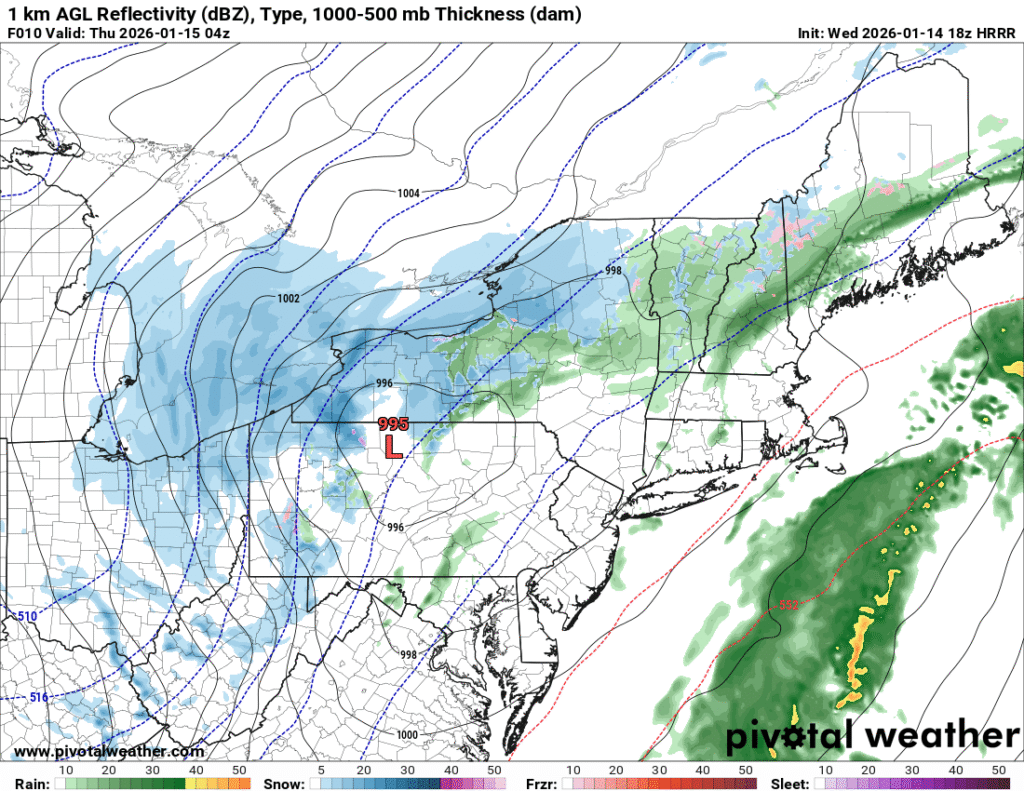
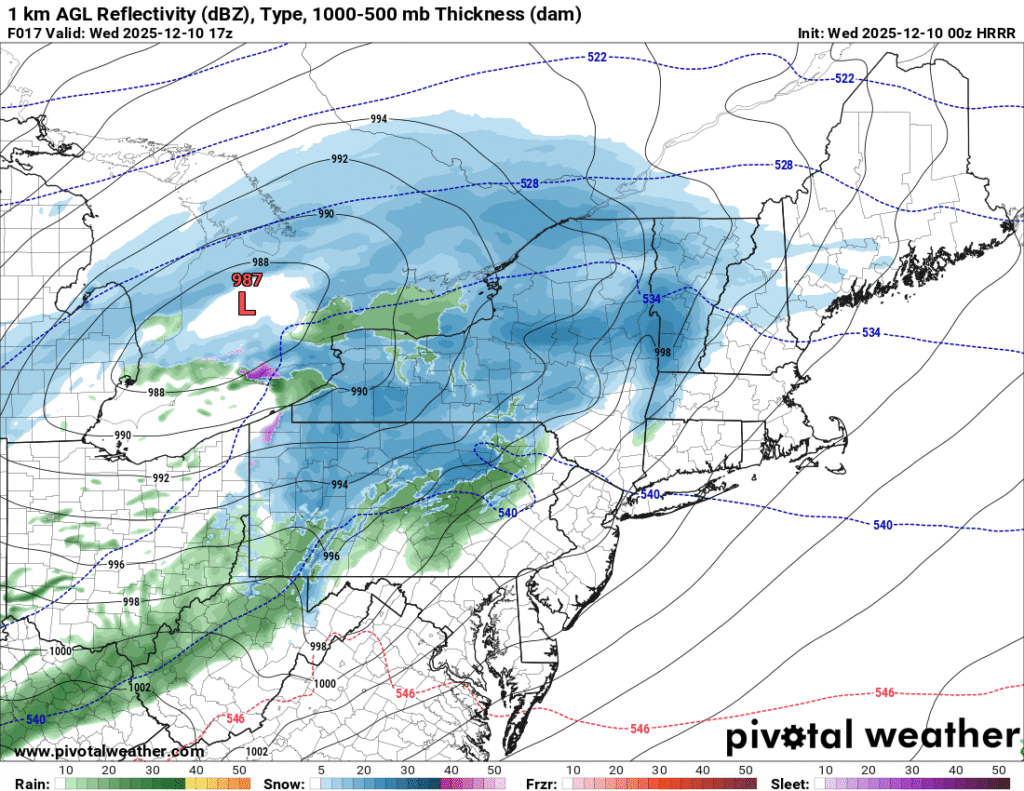
    As a strong cold front moves eastward through the region Wednesday night, Arctic air will begin to rapidly push into the region. The front will be accompanied by rain that will transition to snow with the arrival of the colder air. The combination of water on roadways and temperatures quickly falling below freezing could cause a rapid freeze up Wednesday evening into Wednesday night.

    This image shows a depiction of surface reflectivity across the region late Wednesday evening based on 18z HRRR model guidance. Image courtesy of Pivotal Weather.  

    Snow Accumulations Are Likely For Most Areas Along And West of The Allegheny Front From Wednesday Evening Through Thursday

    As the colder air arrives across the Central Appalachian region Wednesday evening, rain will transition to a period of snow. Warm surface temperatures may initially hinder snow accumulations at first, but snow will begin to accumulate on all surfaces through the night as below freezing temperatures move into the region. A quick accumulation of snow is likely Wednesday evening into the early overnight across many areas of eastern Ohio, northern West Virginia, and western PA before steady snow transitions to scattered snow showers through the remainder of the overnight hours. 

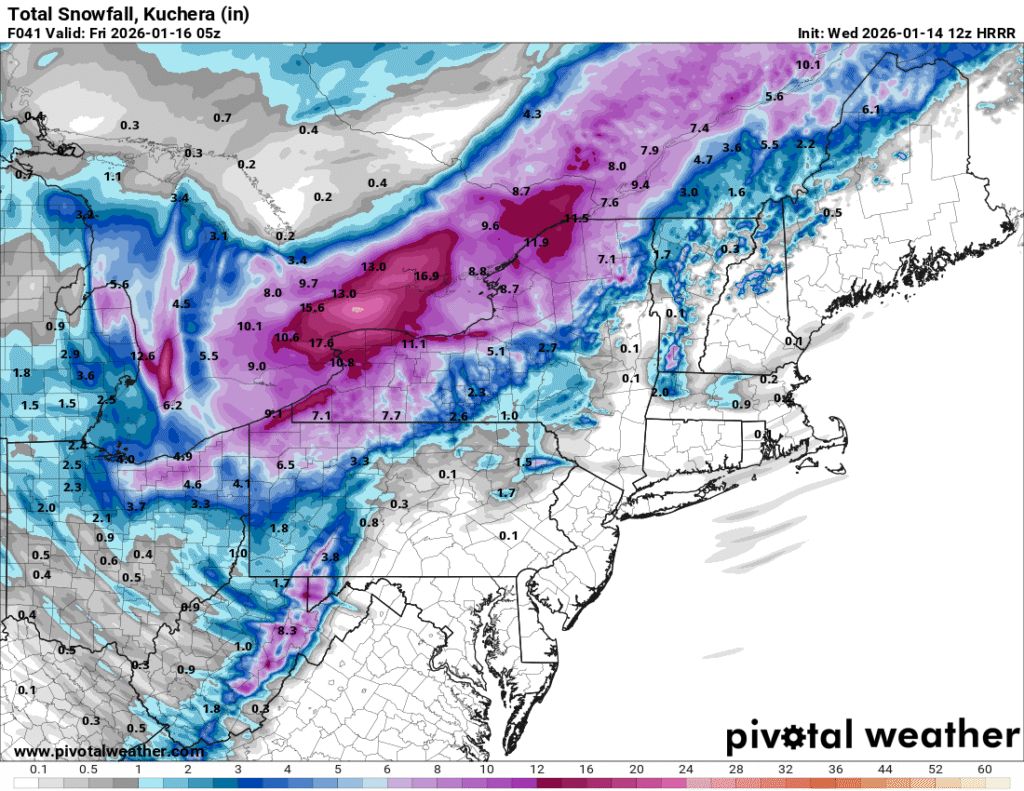
    The image above shows a depiction of expected snow accumulation through Thursday evening based on 18z HRRR model guidance. Image courtesy of Pivotal Weather

    Additional snow showers and squalls on Thursday will lead to additional light accumulations for many areas. A storm total of 1 to 3 inches of snow is likely for many areas in the lowlands of western PA, eastern Ohio and northern West Virginia that are south and west of Pittsburgh. Areas north and west of Pittsburgh will likely see 2 to 4 inches. The higher elevation of western Maryland, northern West Virginia, and southwest PA will likely see 3 to 6 inches of total accumulation with isolated higher amounts possible.. Areas from northeast Ohio into western New York will likely see a more extended period of steady snow leading to heavier accumulations in the 6 to 12 inch range. Lake effect snow on Thursday will also aid in higher accumulations in this area. It is possible that amounts may be higher or lower in some areas depending on how much moisture overlaps with cold air Wednesday evening into the overnight The intensity and coverage of upslope and lake effect snow on Thursday will also have implications on snow totals. 

    Snow Squalls May Lead to Limited Visibility And Hazardous Travel Conditions On Thursday

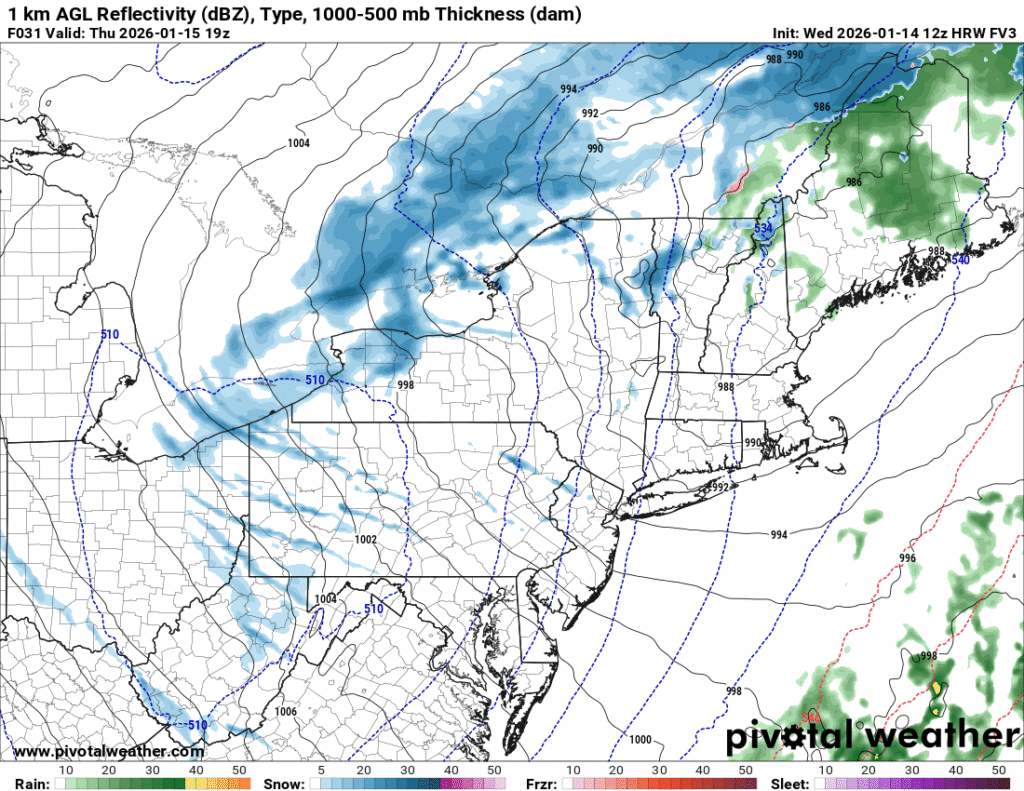
    As we move into the day on Thursday, there will be the potential for more snow showers and some snow squalls to develop for areas mainly along and west of the Allegheny Front. These snow squalls may be accompanied by heavy snow, limited visibility and gusty winds. Any heavy snow squalls that form can drop a quick light accumulation of snow in isolated areas. 

    The image above shows a depiction of the surface reflectivity on Thursday afternoon based on 12z HRW FV3 model guidance. Image courtesy of Pivotal Weather

    More persistent lake effect snow will also be ongoing on Thursday in the typical lake effect regions downwind of Lake Erie. If you plan to travel during the day on Thursday, be sure to heed any snow squall warnings and delay travel until the snow squalls have passed your location. 

    Additional resources for additional information:

  • New Year’s Eve Winter Storm Expected For The Central Appalachian Region

    While most of the region did not experience a white Chirtsmas, the same will not be said for New Year’s Day. Accumulating snow is expected for most areas across the region from Wednesday afternoon through Wednesday night as a winter storm moves into the region. 

    Some of the major impacts from the upcoming winter storm include: 

    • Light Snow Accumulation Possible With A Weak Disturbance Tonight.
    • Plowable Snow Expected For Areas Along And West of The Allegheny Front on New Year’s Eve
    • Snow Squalls Likely Across Much of The Region Late Wednesday. 

    Light Snow Accumulation Possible WIth A Weak DIsturbance Tonight

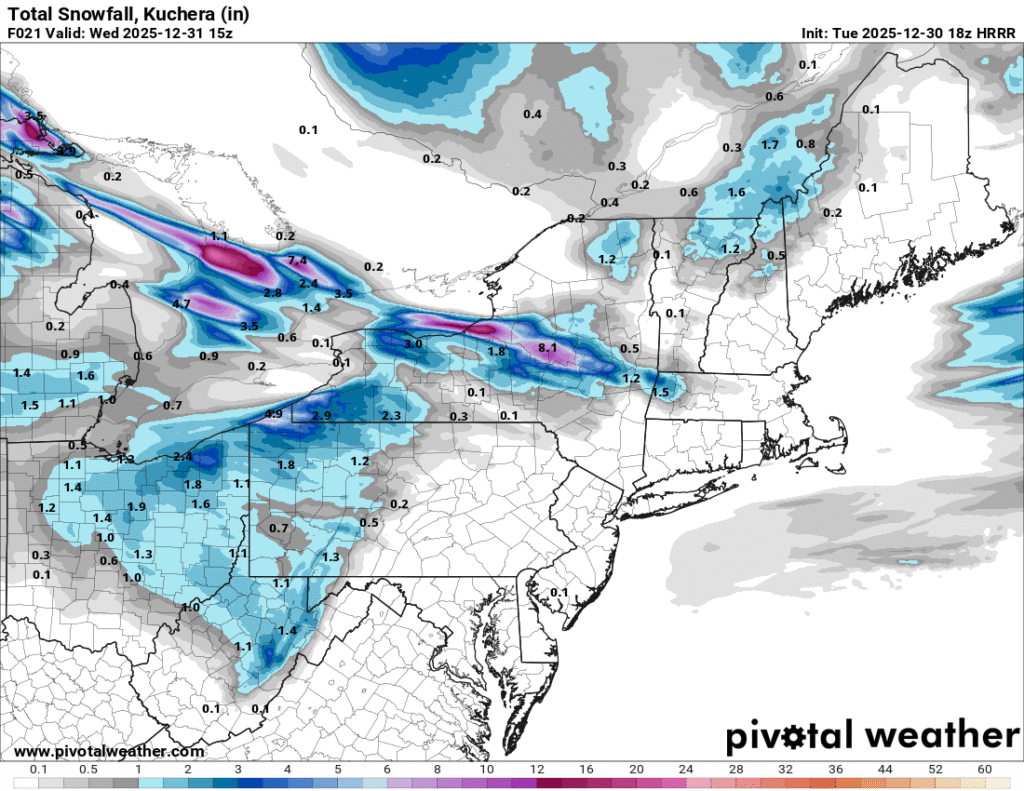
    Prior to the more substantial snow event expected Wednesday into Wednesday night, a weak weather disturbance will move southeast toward the region tonight bringing a quick chance for light accumulating snow for areas along and west of the Allegheny Front. A general coating to two inches is expected for most locations. 

    The image above shows the expected snow totals through 10 a.m. Wednesday, based on the HRRR model. Image courtesy of Pivotal Weather

    Plowable Snow Expected For Areas Along And West of The Allegheny Front New Year’s Eve

    As we head into the day on New Year’s Eve, a storm system will begin to approach the region from the northwest. During the afternoon, snow will begin to fall across the area. The snow will start first in northern and western parts of the region, and spread southeast through the afternoon. Snowfall of varying intensity will continue for most locations through the evening and begin to taper off from northwest to southeast through the overnight hours. 

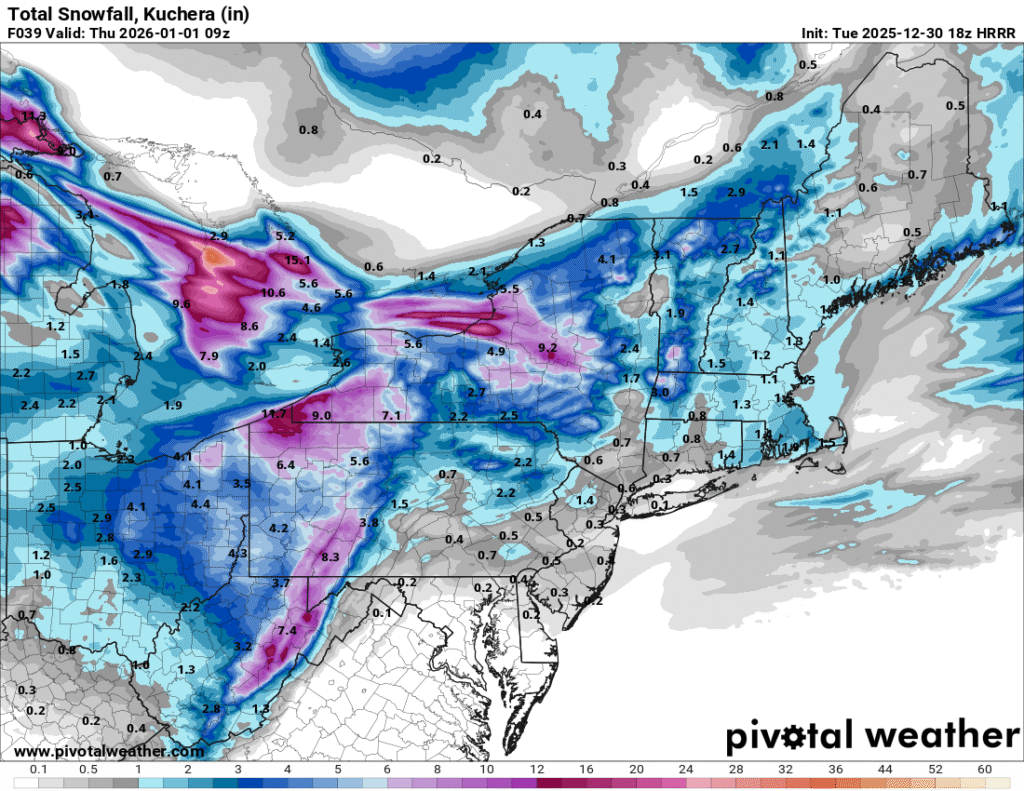
    This map shows a depiction of expected snowfall totals based on the HRRR model. Image courtesy of Pivotal Weather

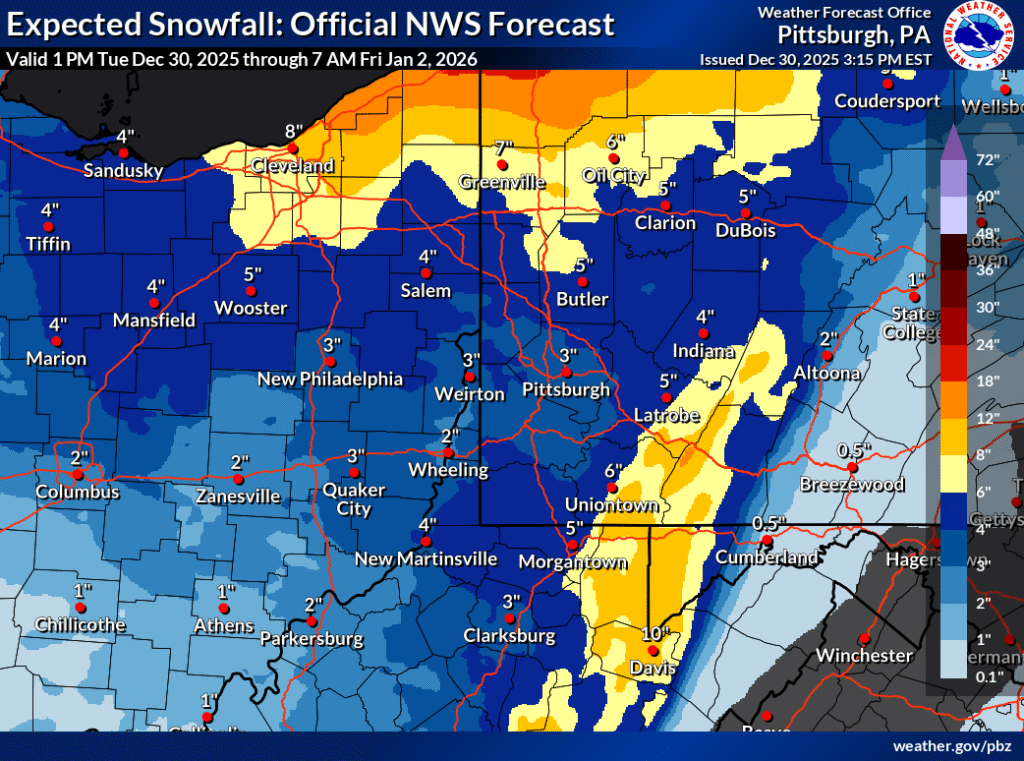
    Snowfall accumulations are expected to range from three to five inches for most locations in eastern Ohio, western Pennsylvania, and western Maryland from Tuesday afternoon through Thursday morning. Higher elevations near the spine of the Appalachians are likely to see snowfall totals in the six to eight inch range, with localized amounts approaching a foot in isolated areas. The typical snowbelt areas form northeast Ohio to southwest New York will likely see a general 12 to 18 inches. 

    The image above shows the expected snowfall accumulations across the region form Tuesday afternoon through Friday morning. Image courtesy of NWS Pittsburgh.

    Snow Squalls Likely Across Much of The Region Late Wednesday

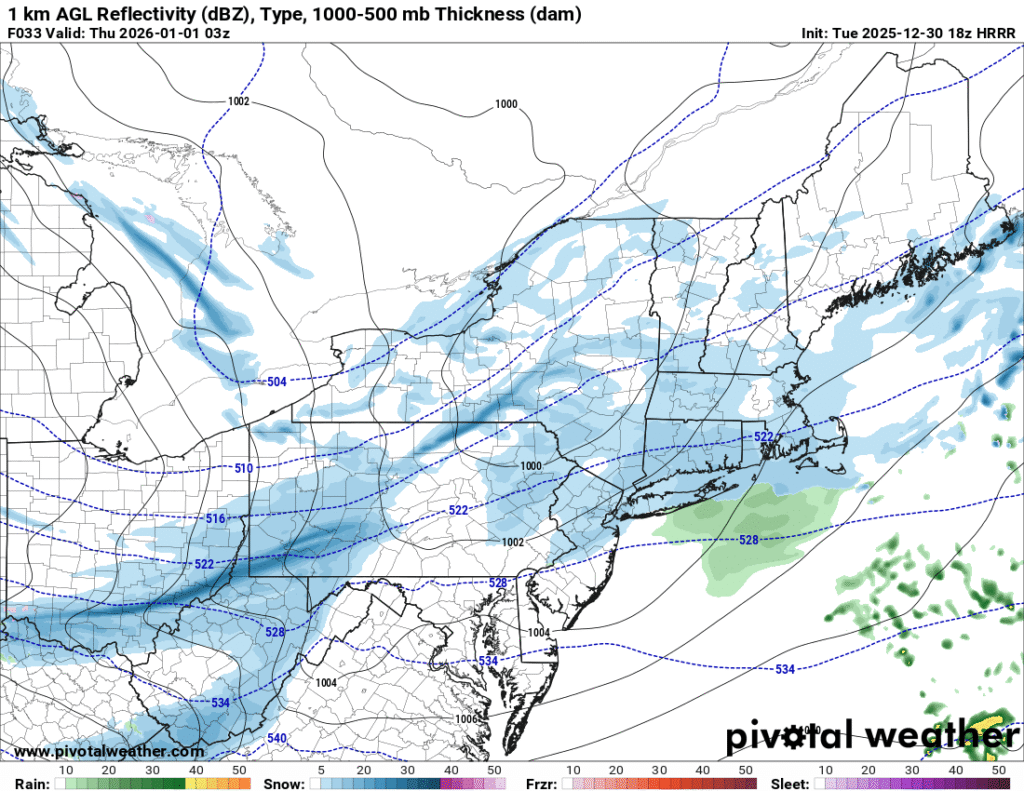
    While snow will be ongoing for many areas by the afternoon hours on Wednesday, a line of snow squalls will likely impact the region as well. These squalls will likely spread from across the areas from northwest to southeast through the evening hours. As the squalls move through, there will be a potential for heavy snowfall rates, reduced visibility, and dangerous driving conditions. 

    The image above shows snow squall potential across the region Wednesday evening, based on the HRRR model. Image courtesy of Pivotal Weather

    While the more substantial snow accumulations are expected along and west of the Allegheny Front during the upcoming event, the advancing snow squalls are likely to bring a quick light snow accumulation to areas east of the Allegheny Front as well. As these snow squalls move across the region, travel will likely become difficult or impossible as heavy snow and gusty winds severely reduce visibility. 

    Additional resources for additional information:

  • Will There Be A White Christmas This Year?

    While Christmas is still 10 days out, the overall weather pattern across the region looks to favor milder conditions than recent weeks with fewer opportunities for snow.

    Here are some of the topics for today’s blog:

    • What Are The Teleconnections indicating For Our Upcoming Weather Pattern?
    • What Are The Forecast Ensembles Forecasting For Christmas Week?
    • Could The Forecast Trend Colder Than Currently Expected?

    Now that we have a framework for today’s blog, let’s begin our discussion. 

    What Are The Teleconnections Indicating For The Upcoming Weather Pattern?

    One of the tools that forecasters use to determine weather forecasts are the teleconnections.

    “Teleconnections are significant relationships or links between weather phenomena at widely separated locations on earth, which typically entail climate patterns that span thousands of miles.”

    These teleconnections are atmospheric and oceanic indicators that cause the jet stream to behave in specific ways. 

    Some teleconnections that forecasters typically use for long range forecasts include: 

    These teleconnections can provide insight into the nature of the large scale weather pattern in the long range. 

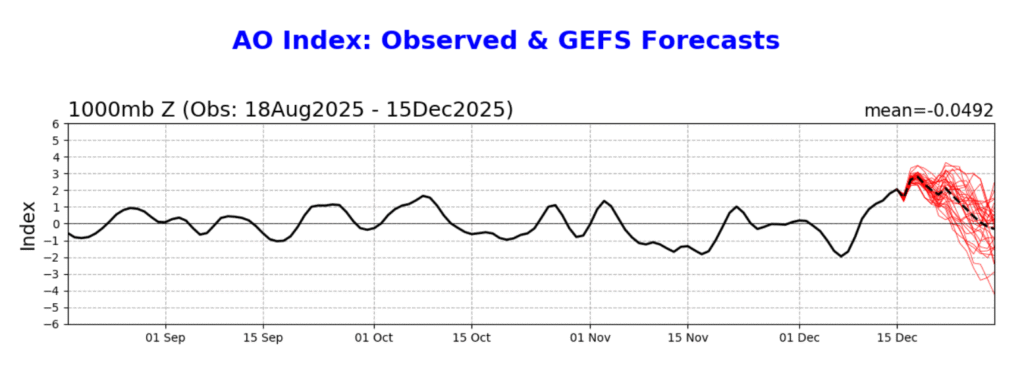
    This image shows the past observations and future forecast of the AO, based on GEFS guidance. Image courtesy of the Climate Prediction Center

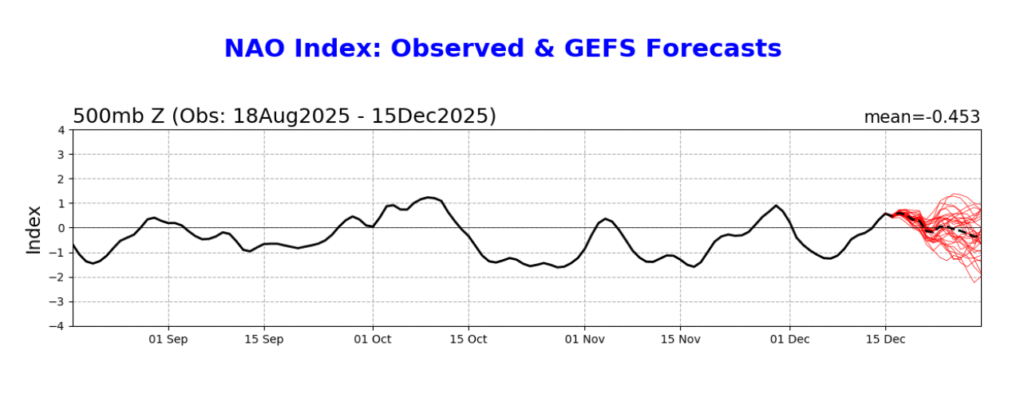
    The image above shows a depiction of the past observations and future forecast for the NAO, based on GEFS guidance. Image courtesy of Climate Prediction Center

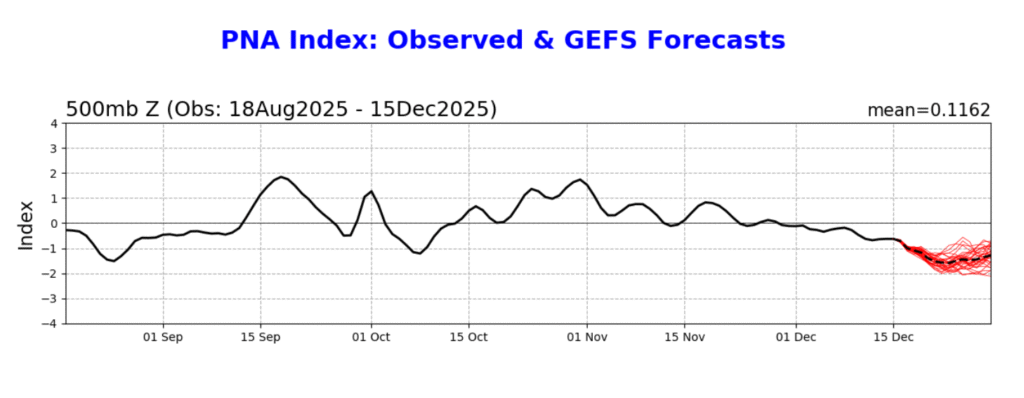
    The image above shows a depiction of the past observations and future forecast for the PNA, based on GEFS guidance. Image courtesy of the Climate Prediction Center

    When examining the teleconnections, the forecast seems to favor a negative PNA and a positive AO as we head toward Christmas. These teleconnections would suggest that a trough is more likely to set up along the West Coast, with limited opportunity for Arctic air to spill south out of Canada. A neutral NAO would suggest that there is not a strong signal in the North Atlantic, at least until right around Christmas. 

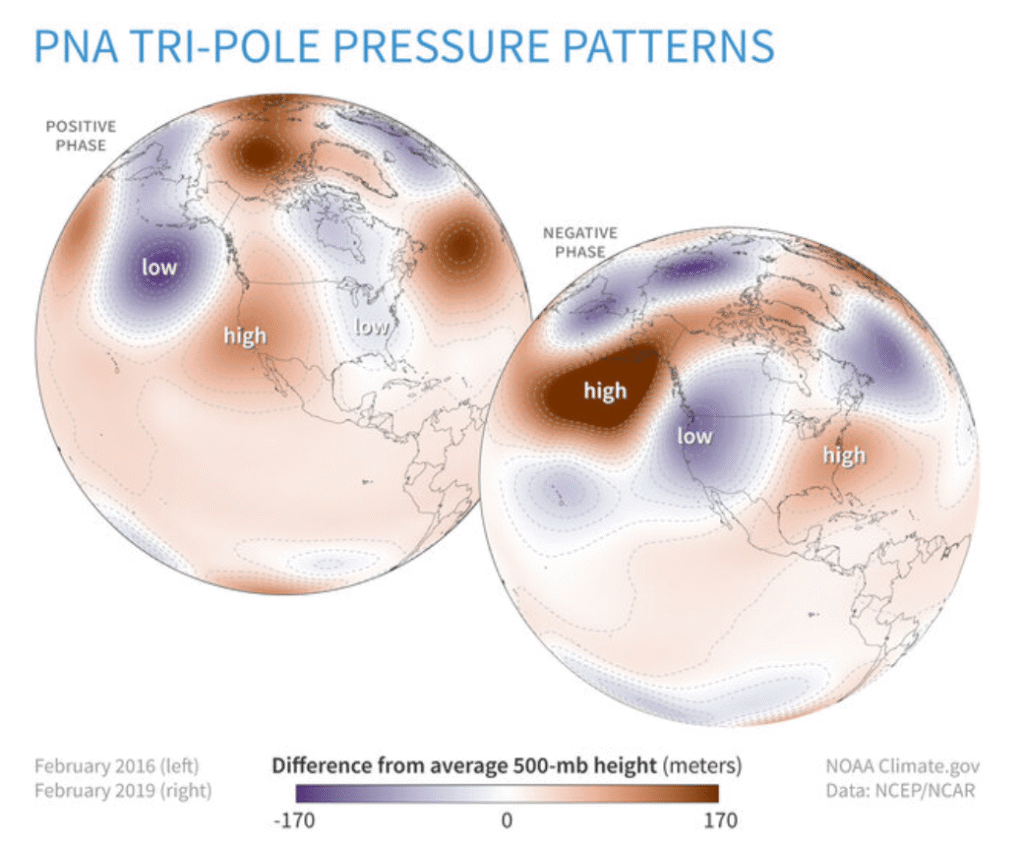
    The image above shows the pressure pattern correlation for the negative and positive phases of the PNA. Image courtesy of the Climate Prediction Center

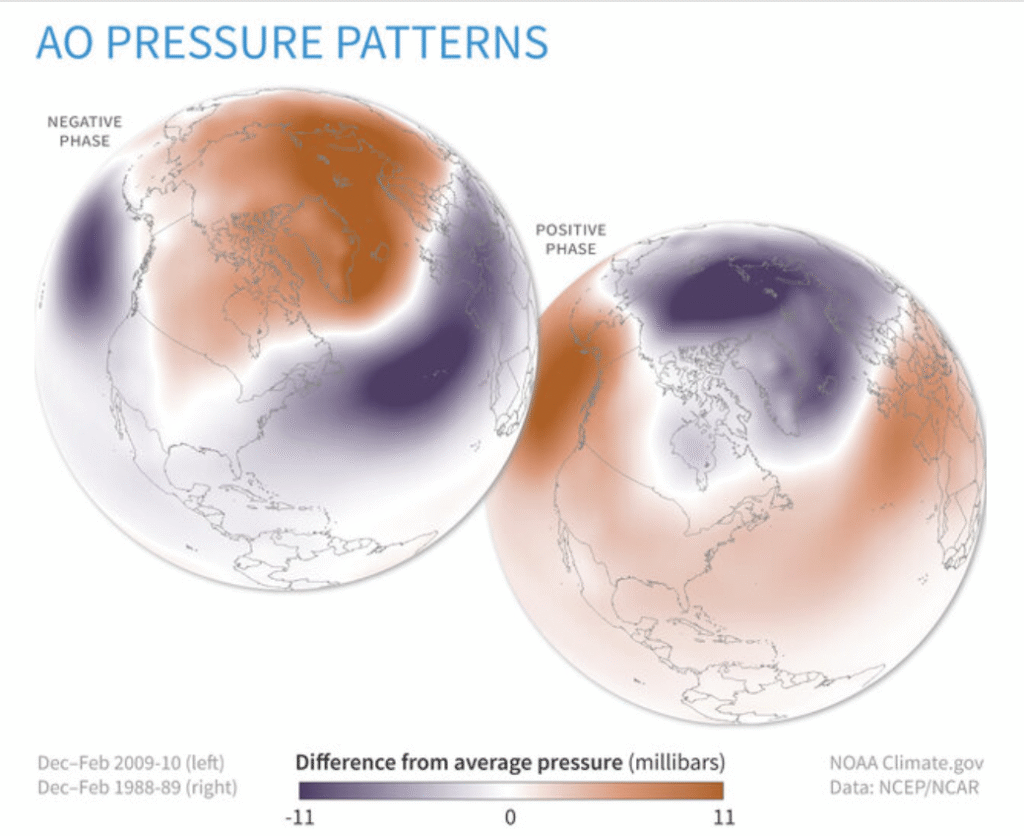
    The image above shows the pressure patterns that are typically associated with the positive and negative phases of the AO. Image courtesy of the Climate Prediction Center

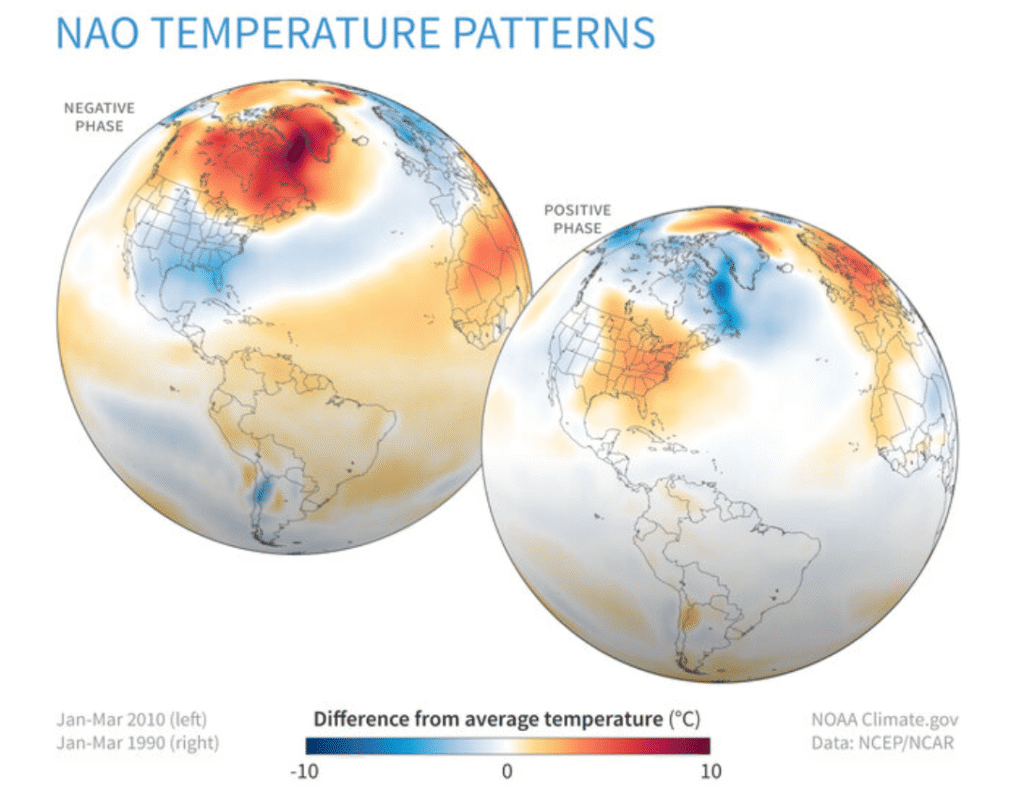
    The image above shows a depiction of the temperature patterns that are associated with the negative and positive phases of the NAO. Image courtesy of Climate Prediction Center

    If the NAO were to trend more negative faster, this could increase the odds of some colder air moving into the Northeast before Christmas. 

    What Are The Forecast Models Predicting For Christmas Week?

    While weather forecast models are typically unreliable beyond a week in advance, they can be used to give a general idea of what can be expected moving forward. Most of the ensemble forecasts are indicating that temperatures will generally be milder for much of the eastern United States as we approach Christmas, aside from possibly the Northeast. This will be aided by a lack of high latitude blocking in the North Atlantic, along with a di[p in the jet stream along the West Coast. 

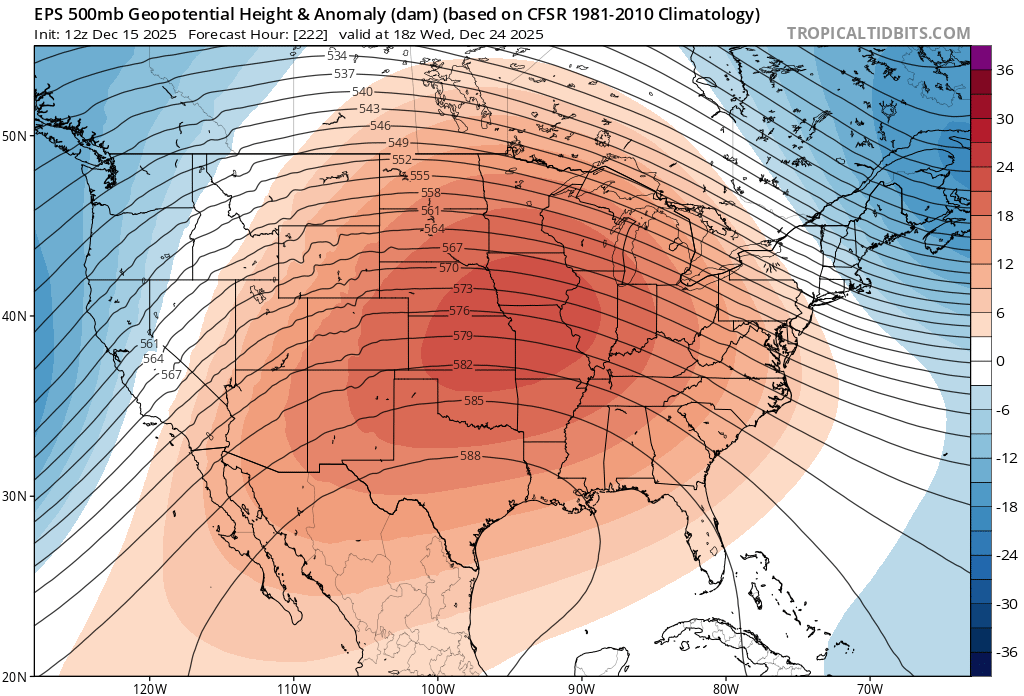
    The image above shows a depiction of the 500 mb height pattern on Christmas Eve based on ensemble guidance from the EPS model. Image courtesy of Tropical Tidbits

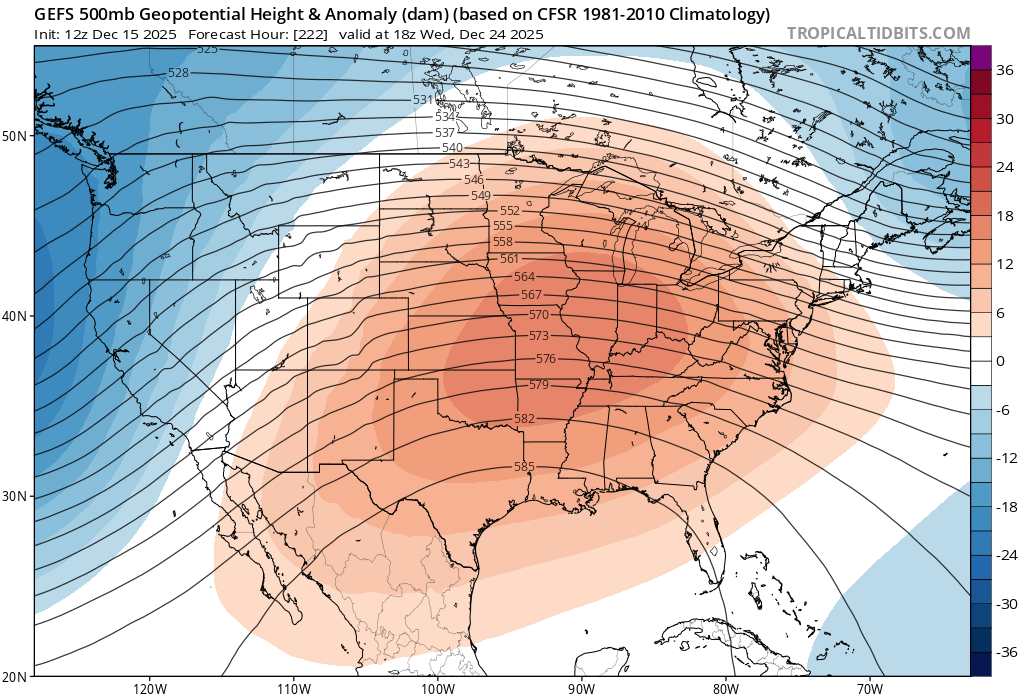
    The image above shows a depiction of the 500 mb height pattern on Christmas Eve based on ensemble guidance from the GEFS model. Image courtesy of Tropical Tidbits

    As can be seen in the images above, the GEFS and EPS ensembles indicate that a ridge is expected to set up across the central United States, with a deep trough moving into the West Coast and a weaker trough exiting the Northeast. This type of a weather pattern would likely favor a milder Christmas Eve and Christmas Day across the Central Appalachia region, reading to a low chance of seeing a white Christmas for most areas. 

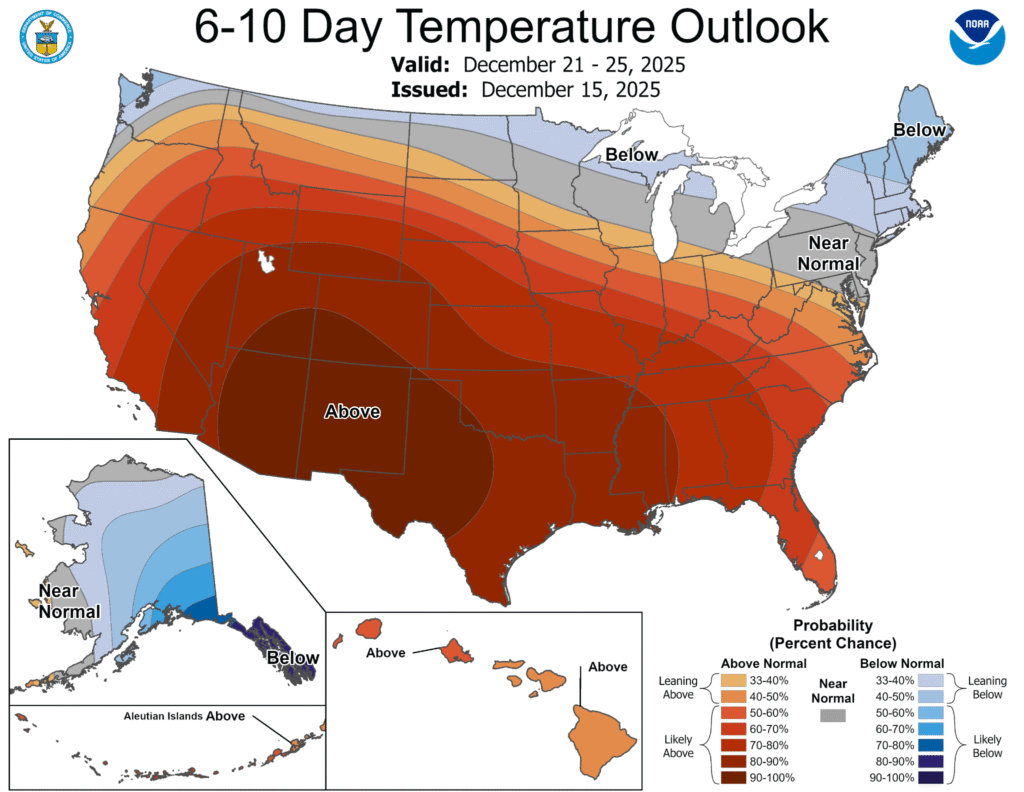
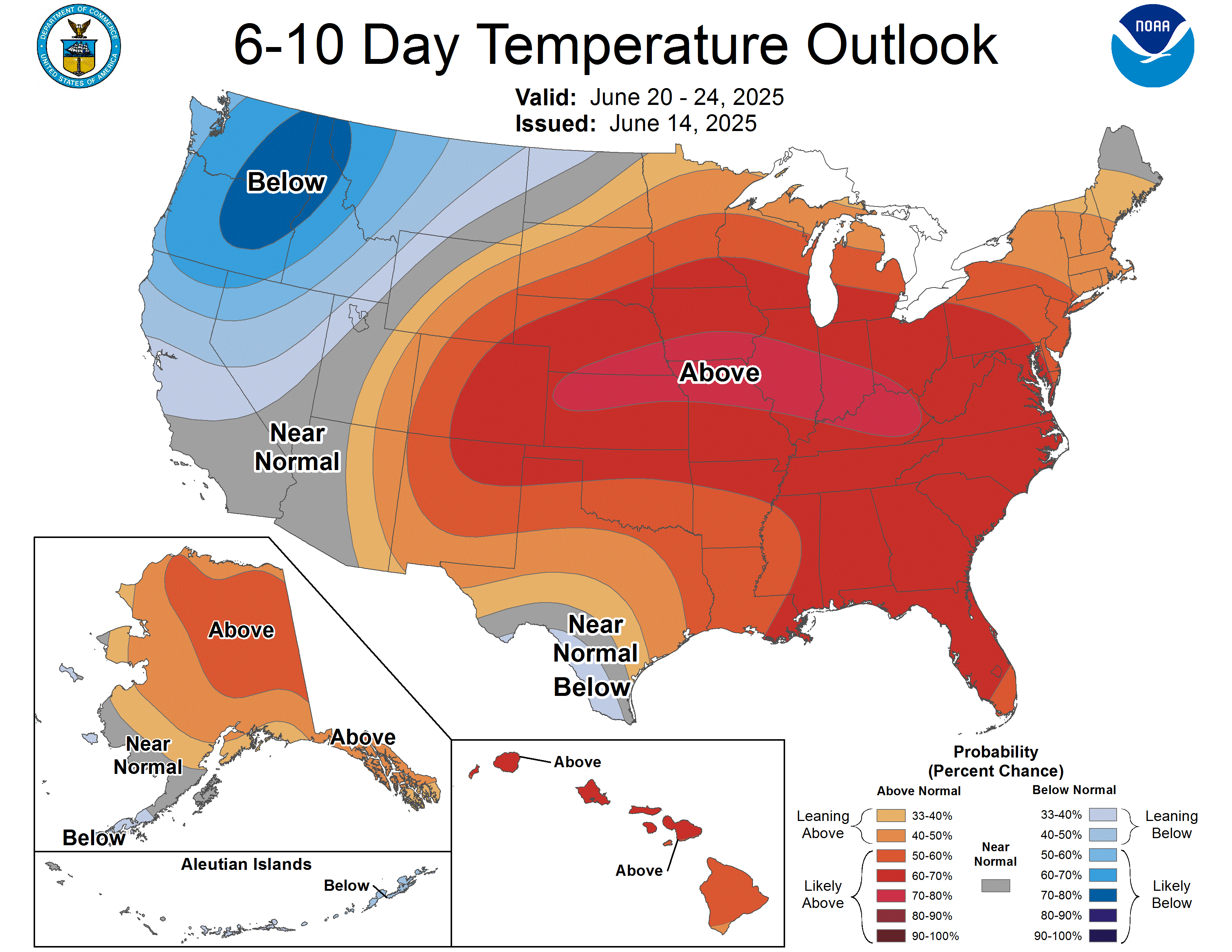
    The image above shows the temperature outlook for the United States in the days leading up to Christmas. Image courtesy of the Climate Prediction Center.

    In addition to the ensemble forecasts, there is also support for the Climate Prediction Center 6-10 Day Outlook, which indicates near to above average temperatures across the region leading up to Christmas. 

    Could The Forecast Trend Colder Than Currently Expected?

    Considering that Christmas is still almost ten days away, there will likely be some changes in the forecast moving forward. While the general thinking is that warmer weather is on the way,  there is a chance that forecast guidance could trend a bit colder. One weakness that forecast models have had recently is a tendency to overamplify the weather pattern in the long range. A more progressive pattern could potentially open the door for at least some marginally cold air, potentially leading to a slightly better chance for winter weather. With that being said, the overall consensus is that the weather pattern leading up to Christmas will not be as cold as recent weeks. 

    Additional resources for additional information:

  • Winter Weather On The Way For Midweek

    After a cold start to the week, more winter weather is on the way for the Central Appalachian region as we head through the midweek period. A clipper system will affect the region on Wednesday, bringing the opportunity for rain, accumulating snow, and strong winds to the region. 

    Here are the primary highlights for the upcoming system:

    • Accumulating snow is likely for areas near and north of interstate 80 and in the higher terrain of PA, WV, and MD on Wednesday. 
    • Low elevation areas south of Interstate 80 in PA may see little to no snow accumulation during the daylight hours on Wednesday depending on precipitation type. 
    • A light accumulating snow is likely in most areas Wednesday night into Thursday due to falling temperatures and wrap-around snow.
    • Blizzard conditions are possible in the mountains of western MD and eastern WV. 
    • Windy conditions are expected for all areas.

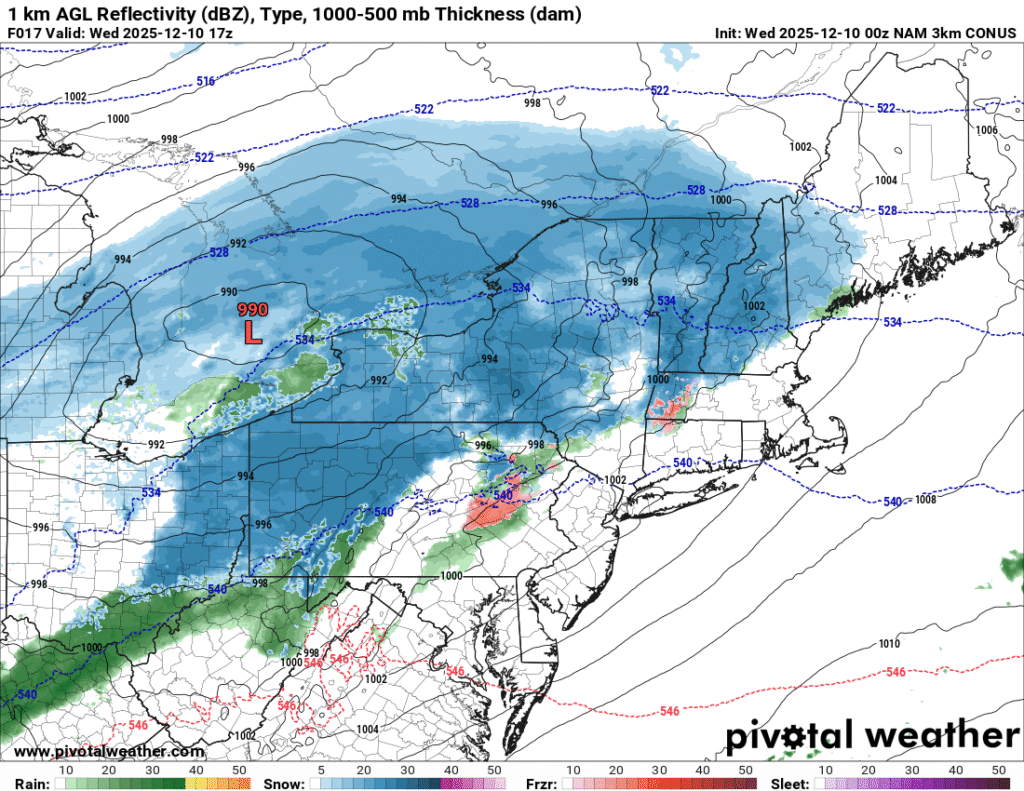
    While confidence is high in accumulating snow along and north of Interstate 80 and in the higher elevations, there is more uncertainty regarding the potential for accumulating snow in the Pittsburgh Metro area on Wednesday. Some model guidance (00z NAM 3km) would suggest that a light accumulation of snow is possible, while other guidance (00Z HRRR) would suggest that this area would receive primarily rain or a rain/snow mix, leading to little or no accumulation 

    The images above show a depiction of the expected precipitation type based on 00z NAM 3km and HRRR guidance. Image courtesy of Pivotal Weather

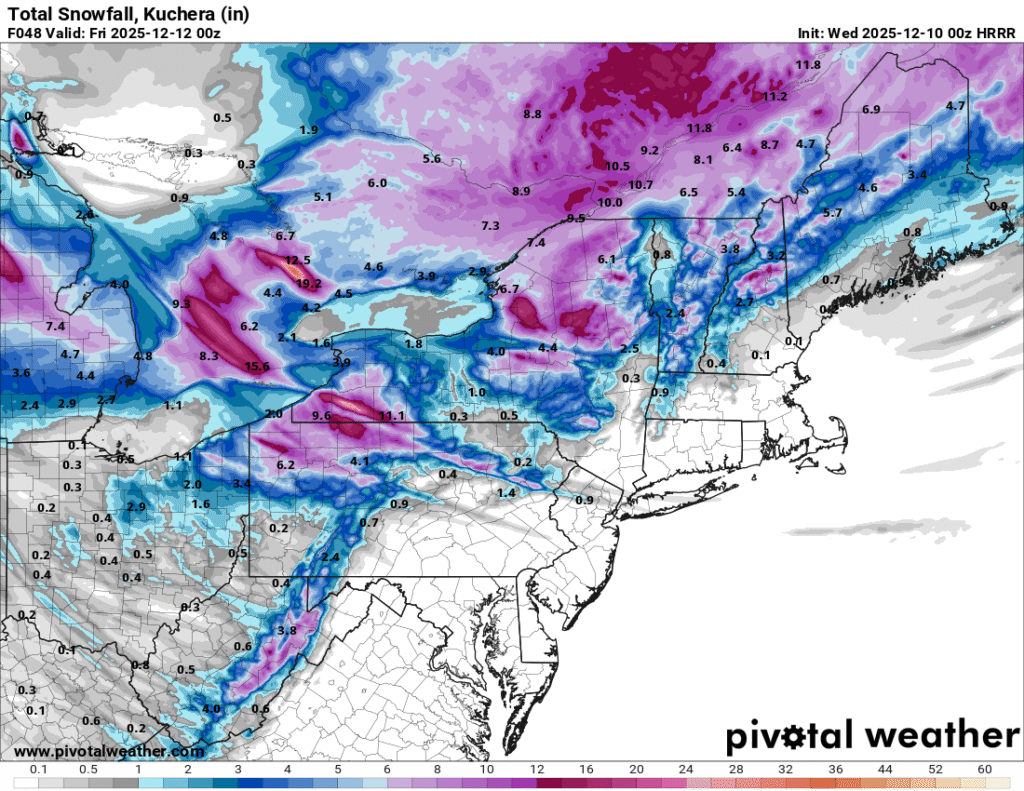
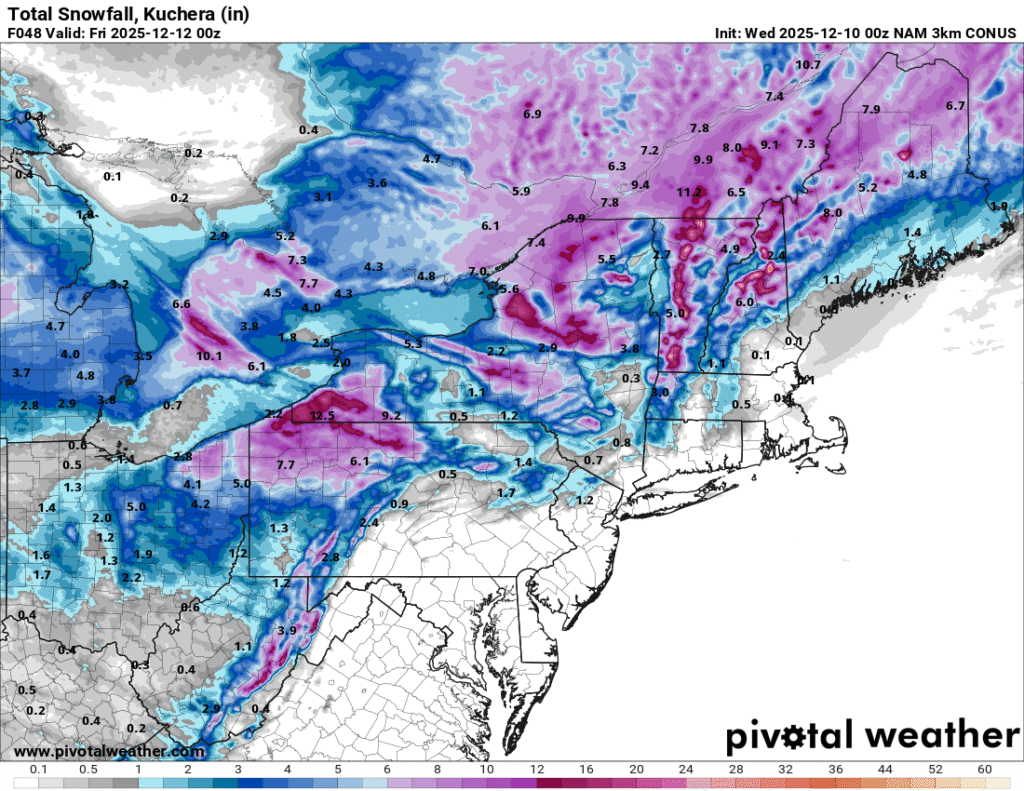
    As would be expected, the NAM 3km is forecasting higher snowfall totals compared to the HRRR, given that it is forecasting more of the precipitation to fall in the form of snow. In addition to the synoptic moisture associated with the system, upslope and lake effect snow will enhance the snow accumulations downwind of Lake Erie and in the higher terrain along and west of the Allegheny Front. In addition to enhanced upslope snow, strong winds will create low visibility that could create blizzard conditions in the mountains of western Maryland and West Virginia. 

    The images above show expected snowfall accumulations across the region through 00z Friday, based on the 00z HRRR and NAM 3km model guidance. Image courtesy of Pivotal Weather

    In general, 3 to 5 inches of snow can be expected across areas along and north of Interstate 80 in western Pennsylvania with 3 to 6 expected in the higher terrain of southwestern PA and northern West Virginia. 

    While there are some uncertainties in the model guidance regarding the exact amount of snow expected across the region, many areas will receive at least light accumulating snow through Thursday. As much colder air spills into the region Wednesday night, slippery travel can be expected across most areas. 

    In addition to the midweek system, there will likely be two more opportunities for snow through the weekend. 

    Additional resources for additional information:

  • Winter Storm Analysis And Update

    The first widespread winter storm of the season will impact the Central Appalachian region Monday night into Tuesday morning bringing widespread accumulating snow to much of the region. There is also a low end potential for wintry mix or freezing rain in some areas as well.

    Here are the main takeaways

    • Widespread accumulating snow is likely
    • Some chance for mixed precipitation in the pa PA and Wv ridges
    • Swath of 3-5” of snow is likely where the heaviest band of snow sets up

    Snow will begin to move into the region around midnight tonight, spreading from west to east. The snow will likely come down heavy for a time around the Tuesday morning commute. The combination of cold surface temperatures and heavy snow will cause roadways to become snow-covered and slippery. Snow will begin to taper off from west to east throughout the morning and most meaningful snow accumulation should end by noon. 

    Will There Be Any Mixed Precipitation or Rain?

    While the chance for accumulating across much of the area is high, there is a chance that enough warm air could get pulled into the system to cause some areas to see rain or a freezing rain for a period Tuesday morning. With that being said, uncertainty in this scenario is fairly high, and it is entirely possible that most areas see mainly snow. 

    Let’s take a moment to look at some high resolution model guidance and analyze some of the differences they present for a possible outcome. 

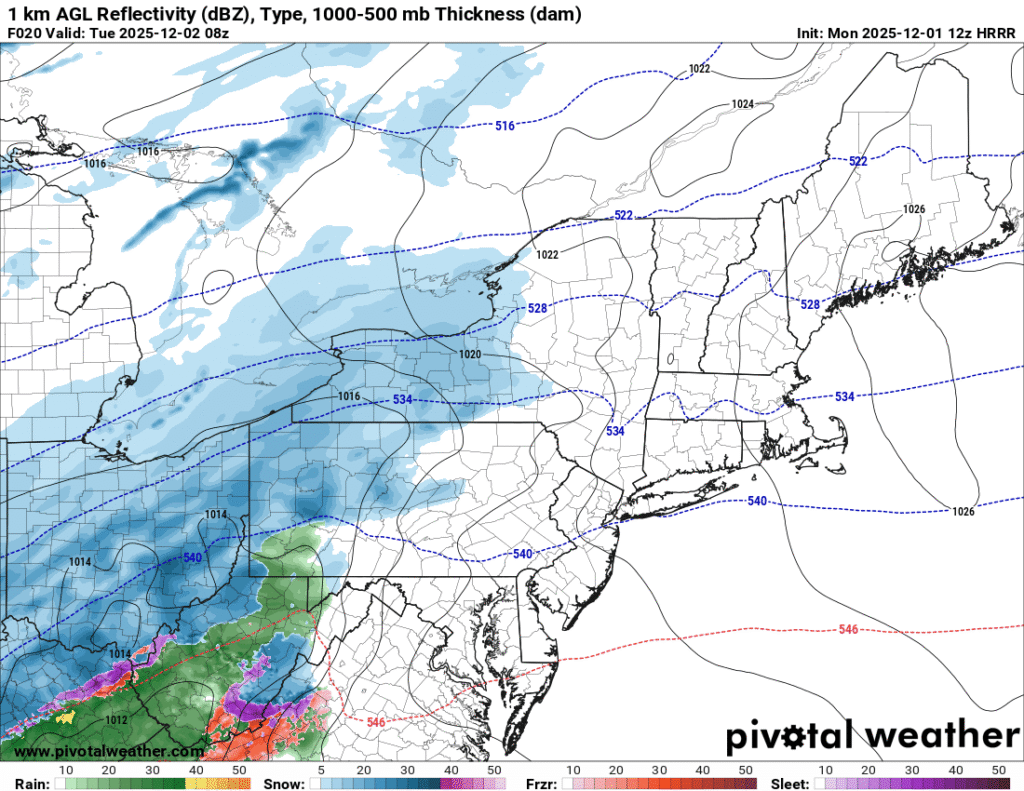
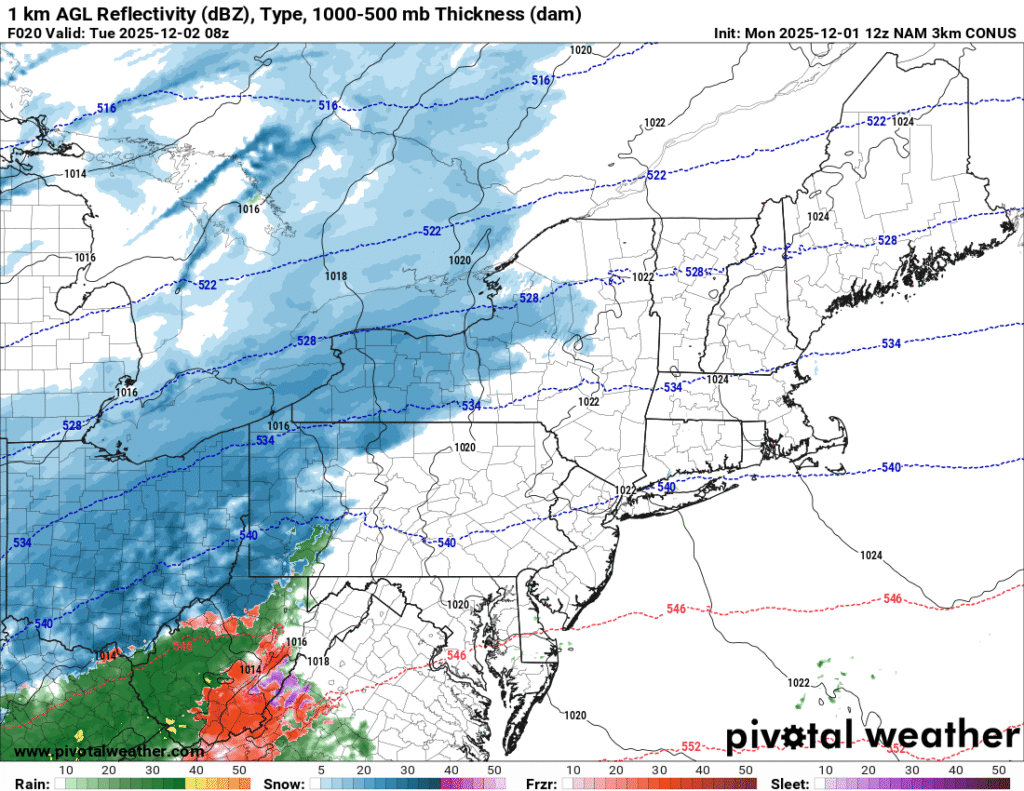
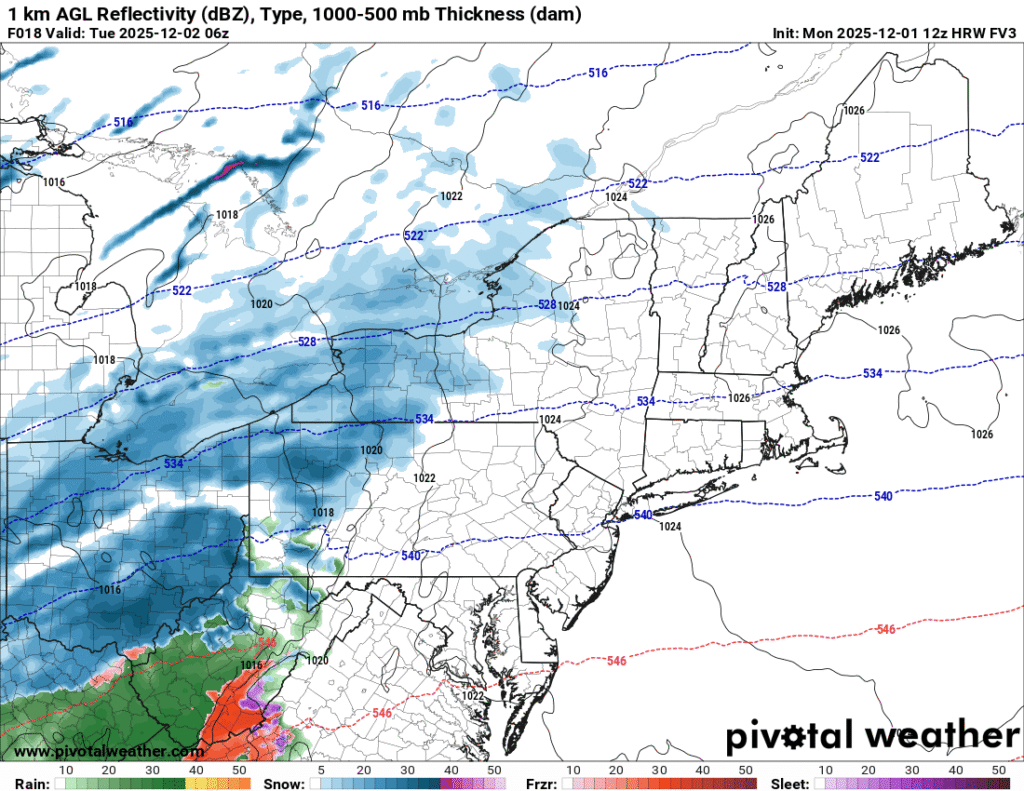
    The images above show a depiction of the precipitation type as the system approached the area Tuesday morning. Images courtesy of Pivotal Weather

    For southwestern PA, it appears that the best chance for precipitation types other than snow would be at the onset of precipitation.Thermal profiles would suggest that the temperatures will quickly fall to at or below freezing at all levels. This will likely cause a quick transition to snow for most of southwestern PA. 

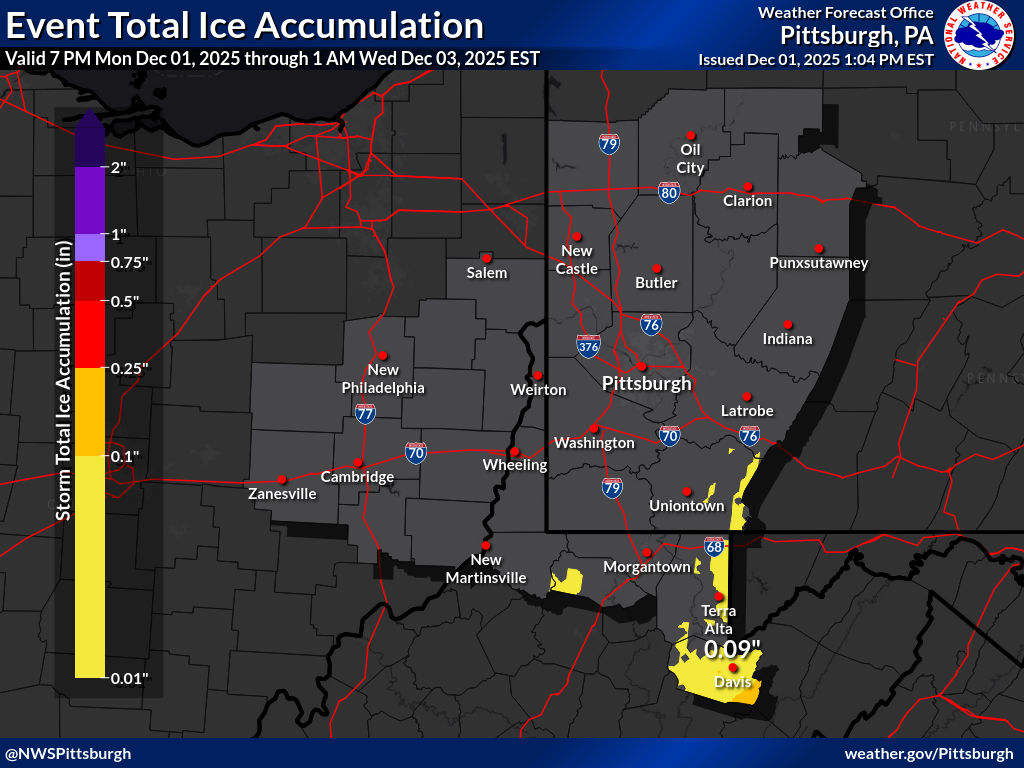
    This image highlights the potential for freezing rain in the PA and West Virginia high terrain. Image courtesy of NWS Pittsburgh.

    Further south into West Virginia, an extended period of freezing rain appears possible, which would reduce snow totals in this area. For areas in West Virginia outside of the high terrain, an extended period of rain will cut down on snow accumulations.

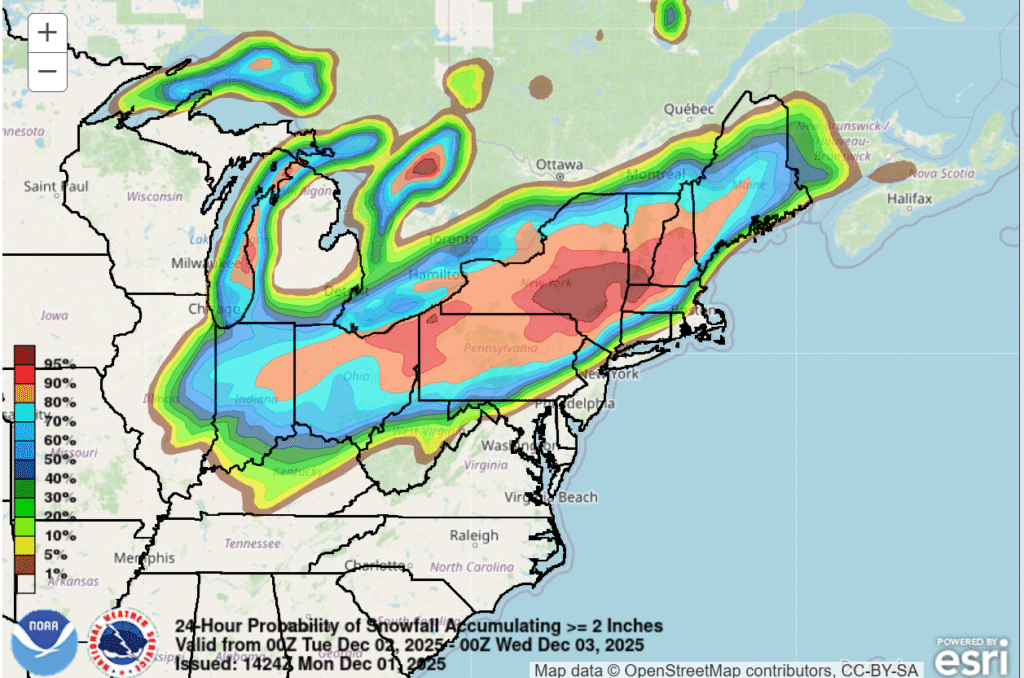
    This image shows the probability of at least two inches of snow across the region during the upcoming winter storm. Image courtesy of the Weather Prediction Center

    The main message is that the first widespread accumulating snowfall of the season is likely across the region, and the system will be disruptive to travel during the Tuesday morning commute. 

    Additional resources for additional information:

  • Is It Going To Snow Early Next Week?

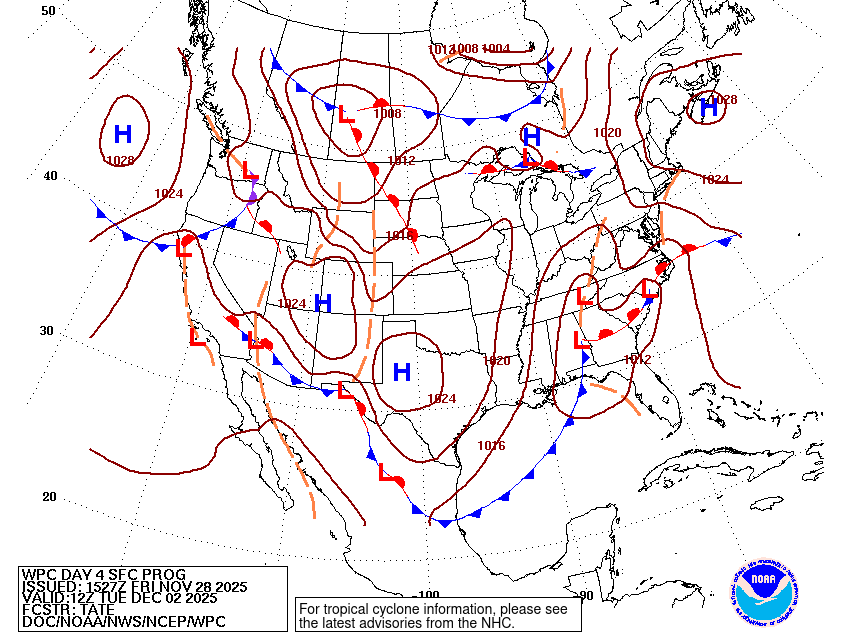
    There is increasing confidence that there will be some accumulating snow across parts of the Central Appalachian region early next week. Over the past couple of days, model guidance has begun to diverge on a solution that indicates a low pressure system that will develop over the Southeastern United States and track northeast toward the Mid-Atlantic coast. 

    This image shows a view of low pressure that is expected to be located over the southeastern United States early next week. Image courtesy of the Weather Prediction Center

    With an intrusion of Arctic air moving into the region Sunday night into Monday, there will be ample cold air to produce accumulating snow on the northwest side of the low pressure system. It is important to note that the system is still 3-4 days out, and the specific details regarding timing, location, and snow accumulation are uncertain at this time. 

    Here are some aspects of the forecast that are more certain:

    • A winter storm will likely affect at least parts of the region between Monday night-Tuesday night.
    • At least some snow accumulation is likely.
    • The chance of travel impacts is relatively high. 

    Here are some aspects of the forecast that are more uncertain at this time:

    • The exact strength and track of the storm is still a bit uncertain
    • The amount of moisture that will overlap with the cold air. 
    • Snowfall totals in any specific location.
    • The location of the rain/snow line.
    • Ice accretion from freezing rain.

    What Is The Most Likely Outcome Based On Current Forecast Model Projections?

    While there are some differences in the models forecast models, the overall consensus indicates that there will be a favorable storm track for accumulating snow for portions of the Ohio Valley, Central Appalachians, Mid-Atlantic, and Northeast. 

    With that being said, let’s take a moment to look at some of the models to see where they agree and disagree regarding next week’s system.

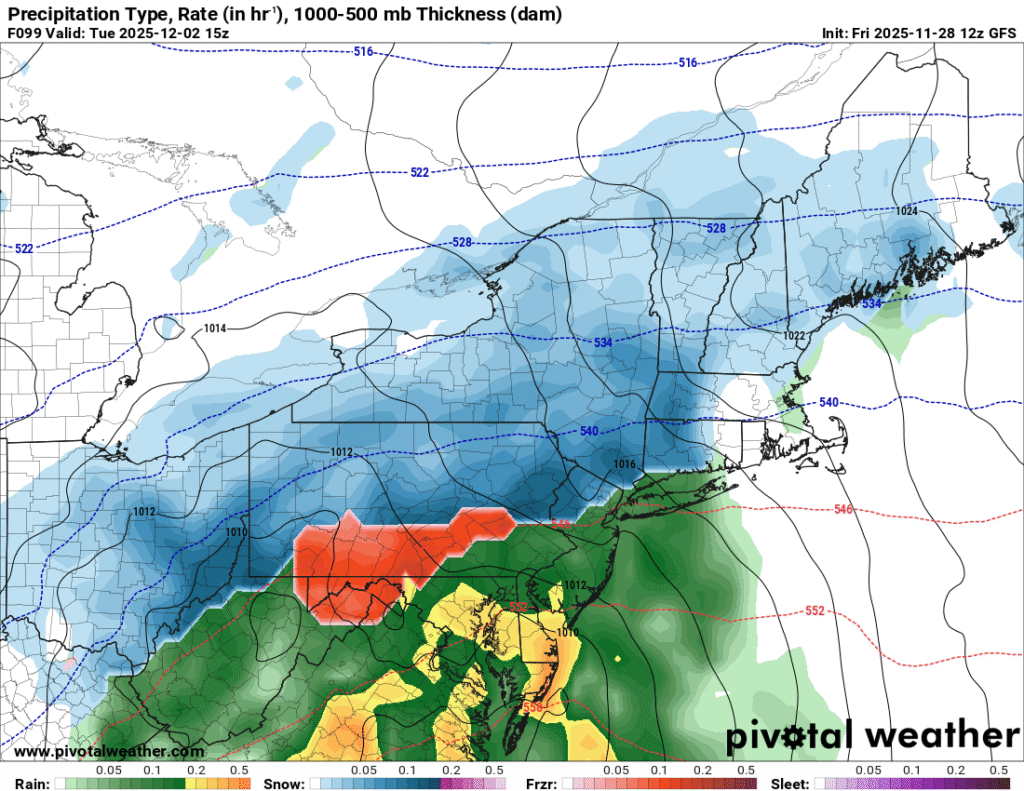
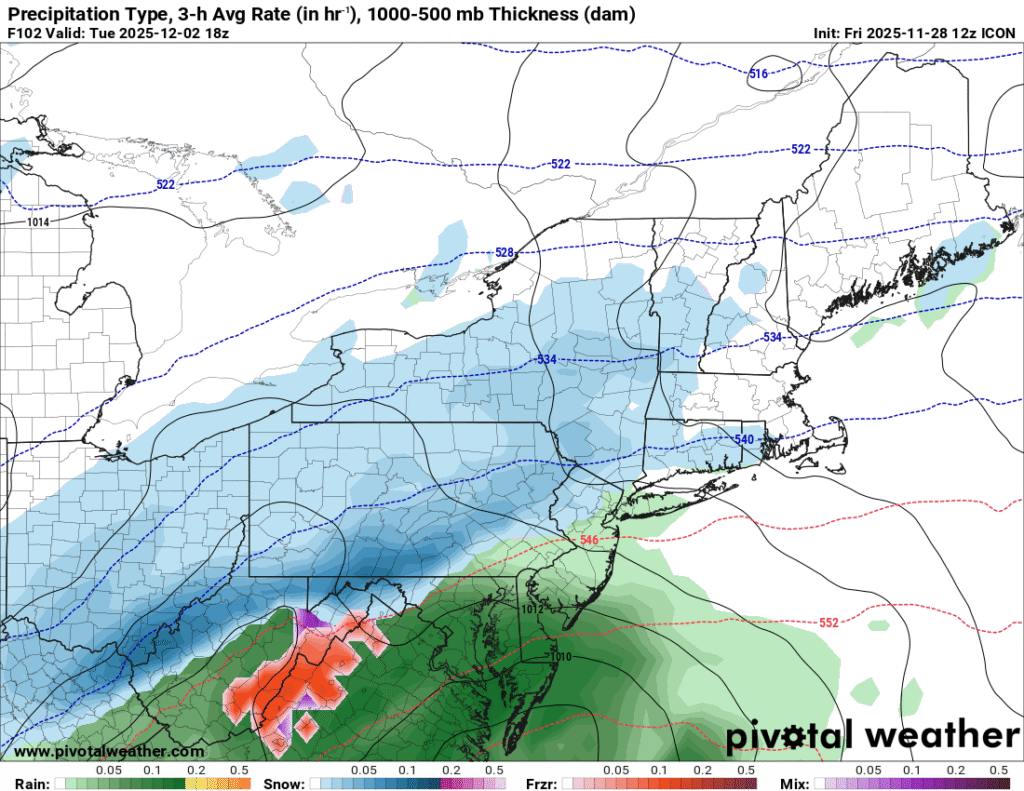
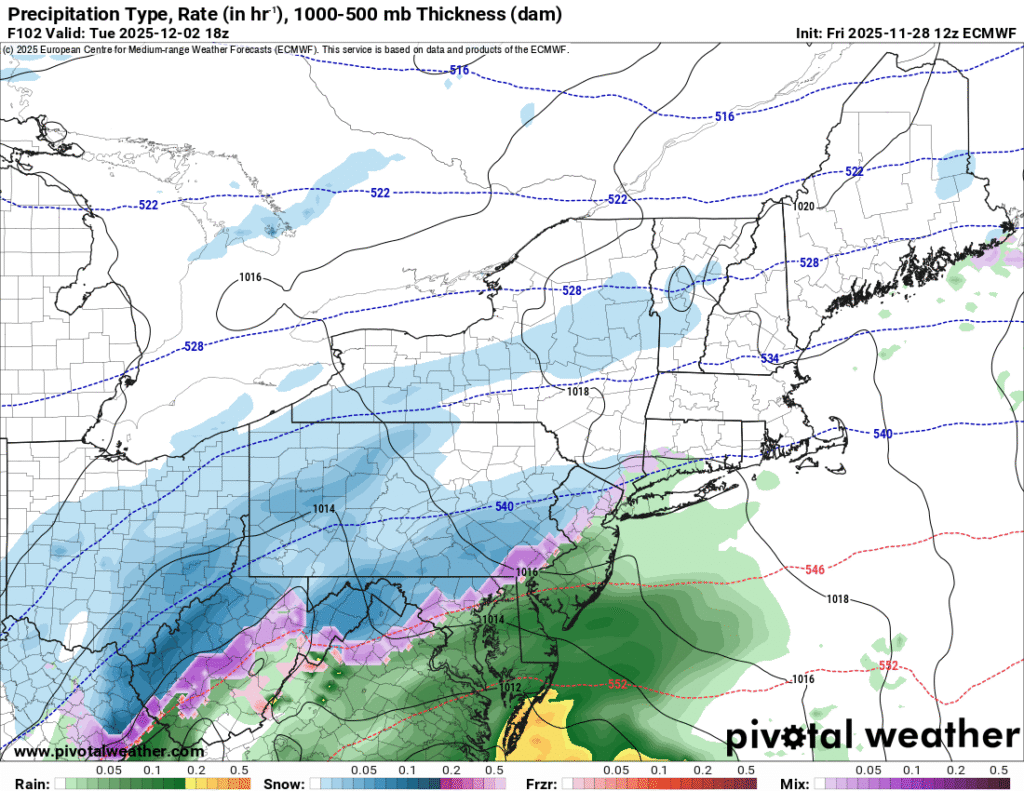
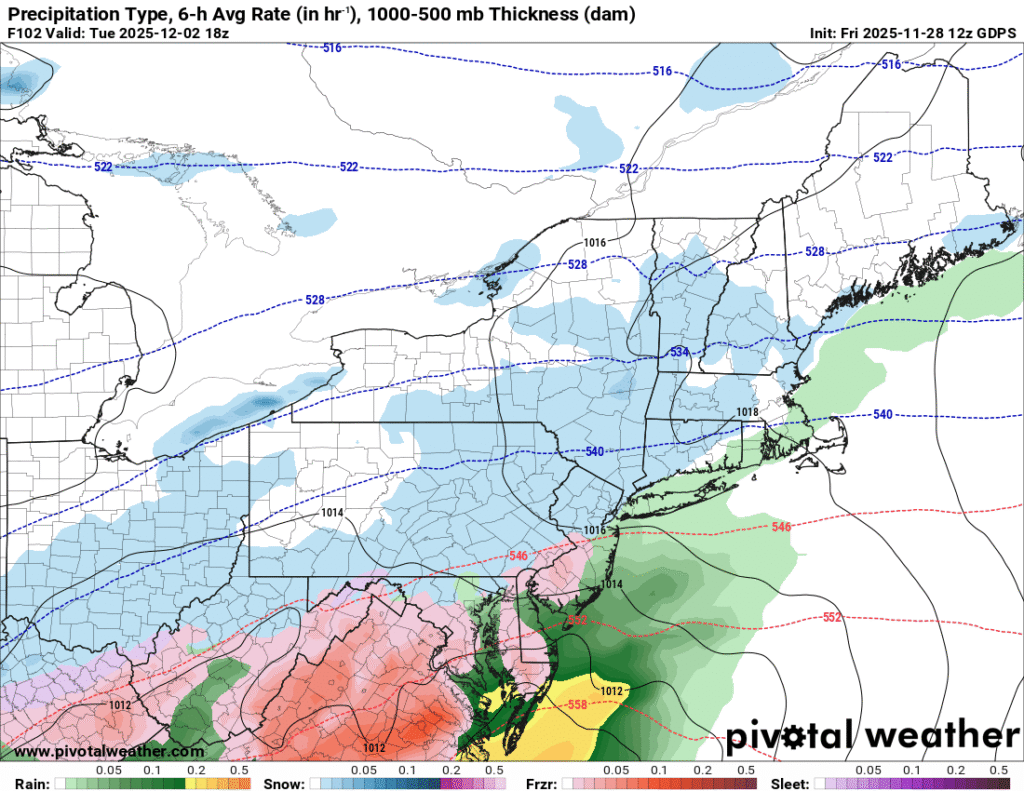
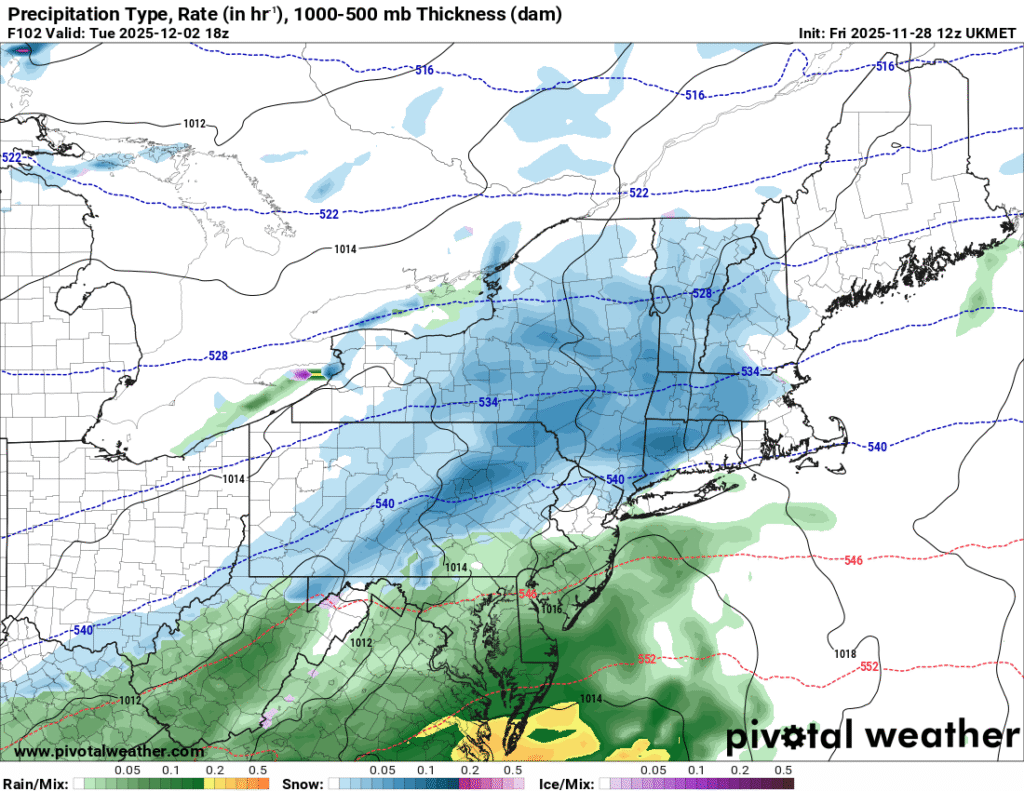
    These images show a depiction of precipitation type and intensity for Tuesday based on 12z guidance from the GFS, ICON, Canadian, UKMET, and European forecast models. Image courtesy of Pivotal Weather

    As you can see, there are still uncertainties regarding the timing, intensity, and track of the low pressure system. There are also uncertainties regarding the location of the rain/snow line, and any mixed frozen precipitation risks that may occur near this line. The big picture is that impactful winter weather is likely early next week, and differences in the models will work themselves out over the next few days. 
    Additional resources for additional information:

  • Thanksgiving Week Weather Forecast Update

    While it has been a mild start to Thanksgiving week, that will certainly change as we approach Thanksgiving Day. Many areas across the Central Appalachia region are currently experiencing wet and relatively mild conditions as a storm system slides through the area. 

    Here is a breakdown of what to expect through the remainder of the week

    • Scattered showers and increasingly windy conditions as a strong cold front approaches from the west on Wednesday. 
    • Scattered snow showers, well below average temperatures, and windy conditions for Thanksgiving Day.
    • Significant lake effect snow accumulation from northeast Ohio to western New York from Wednesday night through Friday.
    • A storm system will bring the likelihood of moderating temperatures and the risk for rain and snow over the weekend.

    What is the Forecast for Pre-Thanksgiving Travel?

    As previously mentioned, Wednesday will feature the approach of a strong cold font that will cause a transition to much colder weather at midweek. 

    Here are a few things to keep in mind:

    • Showers will become more numerous from west to east as the day progresses. 
    • Much colder air will arrive Wednesday night, with the potential for some snow showers along and west of the Allegheny Front.
    • Lake effect may begin to impact parts of the primarily snowbelts from northeast Ohio to western New York.

    What Is The Weather Forecast For Thanksgiving Day?

    Some important things that you should be aware of regarding the Thanksgiving forecast include: 

    • Well below average temperatures across the entire region.
    • Gusty winds will accompany the winter-like chill.
    • Lake effect snow will affect the primary snowbelt areas.
    • Scattered snow showers are possible along and west of the Allegheny Front.

    Thanksgiving Day will likely feel more like the middle of winter than late fall across the Central Appalachia region. 

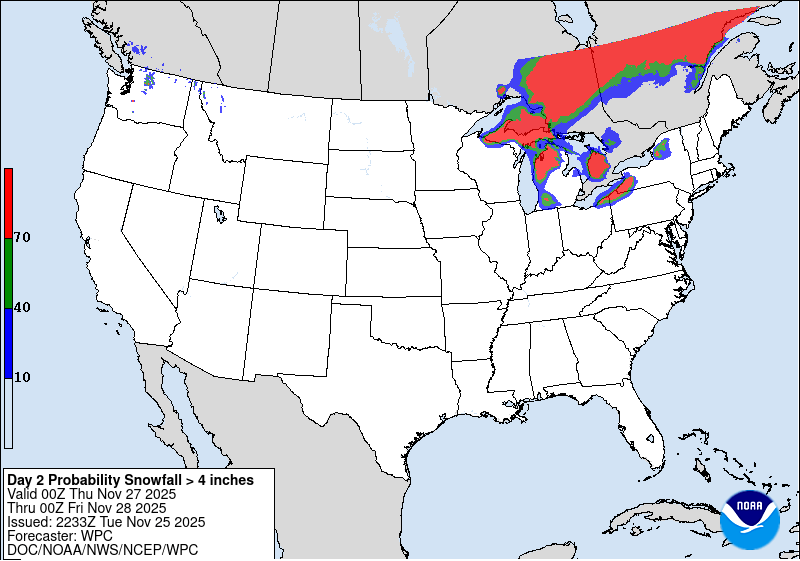
    This image highlights the increased likelihood of impactful lake snow on Thanksgiving Day downwind of Lake Erie. Image courtesy of Weather Prediction Center

    While it will be cold for all areas of the region, those living downwind of Lake Ontario and Lake Erie will experience impactful lake effect snow at times throughout the day. The Weather Prediction is indicating that there is at least a 70 percent chance of 4 inches of snow or more for these areas on Thanksgiving Day. 

    This image shows a depiction of expected lake effect snow on Thanksgiving Day. Image courtesy of Tropical Tidbits

    It is important to note that this is just one model depiction and the location of lake effect snow bands can vary based on the direction of the wind. The main message is that those traveling toward the primary snowbelts on Thanksgiving Day should be prepared for rapidly changing weather conditions. 

    What Will The Weather Be Like For Black Friday And Post-Holiday Travel?

    For much of the region, Black Friday will feature a continuation of the cold and windy conditions. Lake effect snow will likely be ongoing in the typical lake effect regions previously mentioned. 

    This image shows a visual of the continued lake effect activity downwind of the lakes on Black Friday. Image courtesy of Tropical Tidbits

    As we head into the day on Saturday, the weather will likely start off cold and dry across the region.

    This image indicates the potential for mixed precipitation on Sunday. Image courtesy of Pivotal Weather

    As we close out the weekend on Sunday, a storm system over the Plains will likely move toward the region providing the opportunity for precipitation chances. The precipitation type will depend on how much cold is still in place across the region. 

    Additional resources for additional information:

  • Thanksgiving Week Weather Forecast Update

    While there is still some uncertainty regarding the weather forecast for the Central Appalachian region, there are some general ideas that seem to be emerging in the model guidance.

    Here is a breakdown of the Thanksgiving week forecast:

    • A seasonably cool, but generally quiet start to the week on Monday
    • A milder, but more unsettled period for Tuesday into Wednesday
    • A colder weather pattern will take shap around Thanksgiving Day
    • A low end winter weather impact is possible around late week. 
    • A moderating trend by the end of the weekend

    What Is The Pre-Thanksgiving Weather Forecast?

    The beginning of Thanksgiving week is likely to favor seasonably cool, but dry weather conditions over the Central Appalachians. As we head into the day on Tuesday, a weather system will likely move northeast from the Southern Plains toward the Great Lakes. This system will likely bring the chance for rain to the forecast as we head into the day on Tuesday. Rain chances will likely continue until the passage of a cold front around or just prior to Thanksgiving Day. 

    The model image above highlights the approach of a strong cold front at midweek. Image courtesy of the Weather Prediction Center

    What Should You Expect For Your Thanksgiving Day Forecast?

    As we head out to our family gatherings to eat turkey and watch football, there is some uncertainty in the forecast across the Central Appalachian region. Most of the uncertainty is regarding the timing of the midweek cold font. An earlier passage would likely mean a colder Thanksgiving Day, with the potential for some snow showers or flurries. If the front is more delayed, Thanksgiving Day could shape up to be an unsettled day with seasonal temperatures. 

    This image shows forecasted highs for the Central Appalachia region on Thanksgiving Day based on European ensemble guidance. Image courtesy of Pivotal Weather

    Is It Going To Snow After Thanksgiving?

    While this time period is over a week away,  there is no indication that there will be widespread significant snowfall across the region. While there is the potential for lake effect snow, the details of any potential impacts are highly uncertain at this range. 

    Depending on how quickly the cold air retreats, there may be some moderation in temperatures during the weekend. 

    The forecast is still about a week out, and there will need to be modifications to the forecast as we get closer to the Thanksgiving holiday.

    Here is a quick recap of the Thanksgiving week weather forecast:

    • The week will likely start on a seasonably cool, but dry note.
    • There will likely be a couple days of mild, but unsettled weather as we approach Thanksgiving Day
    • Thanksgiving Day will likely turn colder
    • Any meaningful snow accumulation around late week will likely be connected to lake effect. 
    • A moderating trend is possible late in the weekend

    Be sure to check back for updates to the Thanksgiving weatehr forecast as the computer models begin to diverge on a solution.

  • What Is The Weather Forecast For Thanksgiving Week?

    While there is still some uncertainty regarding the weather forecast for the Central Appalachian region, there are some general ideas that seem to be emerging in the model guidance.

    Here is a breakdown of what we are expecting at this point:

    • A seasonably cool, but generally quiet start to the week
    • A milder, but more unsettled period leading up to Thanksgiving
    • The potential for a much colder and wintry pattern to take shape in the days following Thanksgiving

    What Is The Pre-Thanksgiving Weather Forecast?

    The beginning of Thanksgiving week is likely to favor seasonably cool, but dry weather conditions over the Central Appalachians. As we head into the day on Tuesday, a weather system will likely move northeast from the Southern Plains toward the Great Lakes.This system will likely bring the chance for rain to the forecast as we head toward mid-week.

    The model image above shows the approach of a weather system at mid-week that will follow a relatively calm start to the week. Image courtesy of Pivotal Weather.

    What Should You Expect For Your Thanksgiving Day Forecast?

    As we head out to our family gatherings to eat turkey and watch football, the pattern across the Central Appalachian region will likely turn stormy as an amplified polar jet begins to dive toward the central and Eastern United States. Some uncertainty exists regarding the timing of a cold front that will usher in much colder air. As it stands right now, Thanksgiving day may be a transitional weather day with unsettled weather conditions. At this point, it appears the system will mostly bring precipitation in the form of rain for most areas, but this is subject to change. In addition, there could also be a wind component as well.

    This image shows a dip in the jet stream that is projected to move through the Central U.S. around Thanksgiving. Image courtesy of Pivotal Weather.

    Is It Going To Snow After Thanksgiving?

    While this time period is over a week away, there are indications that the weather pattern will turn much colder. There is also the potential for some winter weather as well.

    One of the primary ways that forecasters get insights for long range forecasting involves Teleconnections. Some of the more common teleconnections that forecasters use to forecast long range weather patterns include:

    • North Atlantic Oscillation (NAO)
    • Arctic Oscillation (AO)
    • Pacific-North American Index (PNA)

    The images above show the history and forecast of the AO, NAO, and PNA. Images courtesy of the Climate Prediction Center.

    A negative phase of the NAO tends to lead to colder and unsettled conditions in the Eastern U.S. While a negative AO does not directly correlate to a colder pattern in the Eastern U.S., it does tend to offer more opportunities for cold air to sink southward. In contrast to the NAO, the negative phase of the PNA tends to favor colder conditions in the western United States.

    Bottom Line

    The forecast is still about a week out, and there will need to be modifications to the forecast as we get closer to the Thanksgiving holiday.

    Here is a quick recap of the Thanksgiving week weather forecast:

    • The week will likely start on a seasonably cool, but dry note.
    • There will likely be a couple days of mild, but unsettled weather as we approach Thanksgiving Day
    • Black Friday and the weekend following Thanksgiving will likely turn colder with the potential for some winter weather impacts.

    Be sure to check back for updated information as the forecast models begin to diverge on a forecast solution.